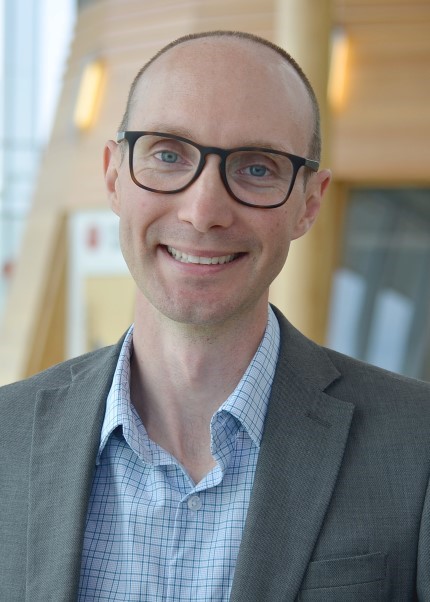
Tyler Finley

(He, Him, His)

Communications Manager

Engineering
Office: EME4241
Email: tyler.finley@ubc.ca


A UBC Okanagan School of Engineering faculty member has earned one of the highest professional honours in Canadian engineering.

Dr. Shahria Alam, Professor of Civil Engineering, has been named a 2026 Fellow of the Engineering Institute of Canada (EIC).

Dr. Shahria Alam

UBCO SoE Professor Dr. Shahria Alam

This recognition marks Dr. Alam’s third fellowship in the past two years, underscoring the national and international impact of his work in resilient and sustainable infrastructure. In 2024, he was named a Fellow of both the Canadian Society for Civil Engineering (CSCE) and the American Society of Civil Engineers (ASCE)—a rare distinction that reflects sustained excellence in research, leadership, and service to the profession.

Dr. Alam holds a Tier 1 Principal’s Research Chair in Resilient and Green Infrastructure and serves as Director of UBC Okanagan’s Green Construction Research & Training Center (GCRTC). His research advances climate-resilient materials and infrastructure systems, with real-world applications that support safer, more sustainable communities in Canada and beyond. He is also deeply engaged in professional service, currently serving as Vice President (Technical Programs) for the Canadian Society for Civil Engineering.

“Dr. Shahria Alam’s work exemplifies what it means to be an engineer in service to society,” says Dr. Will Hughes, Director of the UBC Okanagan School of Engineering. “Any one of these fellowships is a career achievement. Combined, they reflect Dr. Alam’s truly remarkable impact, his commitment to excellence, and his leadership within the profession. We are incredibly proud to have Dr. Alam on our team.”

The Engineering Institute of Canada, founded in 1887, is Canada’s longest-standing engineering organization. Fellowship is awarded in recognition of excellence in engineering and service to the profession and society. Dr. Alam will be formally inducted at the EIC Awards Gala in April 2026, where he will represent UBC Okanagan and the Faculty of Applied Science.

“I am deeply honoured to be named a Fellow of the Engineering Institute of Canada,” said Dr. Alam. “This recognition reflects the collective efforts of my mentors (past and present), my students, colleagues, and the supportive environment at the School of Engineering at UBC Okanagan. I am especially grateful to my family for their unwavering support. I look forward to continuing research and collaborations that advance resilient, sustainable infrastructure in service of communities and society.”

Two UBC Okanagan School of Engineering professors are among 71 UBC researchers to receive new funding from the B.C. Knowledge Development Fund (BCKDF).

Dr. Qian Chen, Assistant Professor of Civil Engineering, and Dr. Klaske van Heusden, Assistant Professor of Mechanical Engineering join six other UBC Okanagan researchers in being recognized.

The BCKDF supports the development of cutting-edge research infrastructure—such as laboratories, tools and equipment—helping B.C. institutions attract top researchers, foster innovation, and strengthen partnerships with industry and community.

“Congratulations to Dr. Chen and Dr. van Heusden on this well-deserved recognition. Their innovative work reflects the strength and ambition of engineering research at UBC Okanagan—advancing solutions that improve lives, strengthen industry partnerships and create lasting societal impact,” said Dr. Will Hughes, Director, School of Engineering.

Dr. Qian Chen — Digital Integration for Robotic Fabrication in Construction

A woman stands on a construction site with her hands in the air, wearing a VR helmet. She points to something in the air, seeing it through her VR lens.

Award: $113,041

Dr. Qian Chen’s project, Digital Integration for Robotic Fabrication in Construction (DIRFIC), aims to advance rapid and affordable housing solutions by streamlining digital workflows in industrialized construction.

Her research focuses on digital and immersive technologies, optimization algorithms, and fabrication-aware design to accelerate the digital transformation of construction. She earned her Doctor of Science in Civil, Environmental and Geomatic Engineering from ETH Zurich, where her work advanced digital supply chain coordination using lean production methods, BIM innovations, and optimization tools.

Before joining UBCO, Dr. Chen supported the UK Construction Productivity Taskforce at the University of Cambridge. At UBC Okanagan, she leads the Construction Integration and Digitalization Lab, working closely with industry and municipal partners on circular economy strategies, configurator design, and digital fabrication processes that improve performance and sustainability in construction.

“DIRFIC would be a timely application since robotic technologies and supply chain integration are changing the construction and manufacturing landscape. It will deliver methods about design for robotic fabrication of building components and intelligent decision support for improved fabrication productivity. By reducing the cost and complexity of digital fabrication, DIRFIC can help SMEs and startups adopt construction automation technologies and maximize the practical benefits, in turn making the Canadian construction and manufacturing job market more attractive to skilled workers.” said Dr. Chen.

Dr. Klaske van Heusden — Data-driven Control for Safety-critical Applications

Klaske van Heusden

Award: $79,842

Dr. Klaske van Heusden’s project focuses on the algorithms required to make the next generation of automated systems safe. Her research enhances high-performance, high-precision robotics and mechatronics through learning-based control. Her work supports emerging applications in agriculture and health care, improving sustainability and safety.

Dr. van Heusden completed her PhD at EPFL (École Polytechnique Fédérale de Lausanne), where she developed the first data-driven feedback-controller design method guaranteeing closed-loop stability. She also holds an MSc in Mechanical Engineering from Delft University of Technology and completed postdoctoral work at UC Santa Barbara, developing control algorithms for the artificial pancreas.

Before joining UBCO Engineering, she led interdisciplinary biomedical research projects in UBC’s Department of Electrical and Computer Engineering, contributing to the development of closed-loop anesthesia delivery devices and, more recently, sensing and control for robotic welding.

“This infrastructure will allow us to move our fundamental research to applications. We are grateful for the BCKDF support for our research and their commitment to providing a high-quality training environment to support the automation and robotics sector in BC,” said Dr. van Heusden.

attendees of the 14NF Ceremony at UBCO

UBC Okanagan’s School of Engineering hosted campus community and guests at the annual 14 Not Forgotten ceremony on Dec. 1. The event offered solemn reflection, collective remembrance and a reaffirmed commitment to combating gender-based violence. 

The ceremony honoured the 14 women murdered during the 1989 École Polytechnique massacre, whose lives and aspirations were cut short by an act of misogynistic violence.  

Event emcee Dr. Alon Eisenstein, Chair of the School of Engineering’s Equity, Diversity and Inclusion committee, shared how the names and stories of these fourteen women remain central to the annual memorial, grounding the campus community in the ongoing imperative to build a safer, more equitable society. 

Speakers Dr. Louzanne Bam and Dr. Sumi Siddiqua shared powerful reflections on remembrance, resilience, hope and the work still required to advance equity across STEM fields. 

A moving reading of the 14 biographies by student speakers followed—each story a poignant reminder of unrealized futures and the collective resolve needed to honour them through ongoing action.  

The ceremony concluded with a moment of silence and closing remarks, inviting attendees to continue their reflection at the campus memorial installation or in the EME foyer throughout the day. The memorial fire bowl, For Future Matriarchs, remained lit for the day to symbolize both remembrance and hope. 

The School is deeply grateful to all the students, faculty and staff who contributed to the thoughtful planning and organization of this event, as well as to all those who attended.  

Photo Galleries

  • View a photo gallery of SoE students painting the E white in honour of the 14 Not Forgotten.  

About the 14 Not Forgotten 

UBCO’s 14 Not Forgotten Memorial commemorates the École Polytechnique tragedy that took place 36 years ago and honours the lives and legacies of missing and murdered Indigenous women, girls and 2SLGBTQIA+ people. On December 6, 1989, an armed man entered an engineering classroom at Montréal’s École Polytechnique. After separating the men from the women, he opened fire—killing 14 women and wounding 10 others. In response, Canada established December 6 as the National Day of Remembrance and Action on Violence Against Women, a reminder of the gender-based violence that persists today in Canada and around the world. 

UBC EME

The School of Engineering at UBC Okanagan is proud to celebrate Dr. Mohammad Hossein Zarifi on being named a Fellow of the Institute of Electrical and Electronics Engineers (IEEE), effective January 1, 2026. Fellow is the highest grade of IEEE membership and is widely recognized as a prestigious honor and an exemplary career milestone.

The IEEE Board of Directors awarded Dr. Zarifi this honour for contributions to applied electromagnetics and advanced materials for cutting-edge sensing and communication devices. Fewer than 0.1% of IEEE’s global voting membership receive this recognition each year, underscoring the exceptional impact of Dr. Zarifi’s research and scholarly leadership.

As the world’s largest professional organization for advancing technology, IEEE represents more than 500,000 members across 190 countries and sets global standards in electrical engineering, computing and electronics. Achieving the rank of Fellow reflects a career of sustained excellence, innovation and international influence.

Celebrating Dr. Mohammad Hossein Zarifi

“On behalf of the School of Engineering, congratulations to Dr. Zarifi on this milestone recognition. His work in electromagnetics and intelligent sensing has expanded what’s possible in communication technologies, elevating the international research footprint of our School and UBC Okanagan. Becoming an IEEE Fellow is a significant accomplishment at any institution, but achieving this distinction here, in a growing and dynamic environment, makes it even more extraordinary. This honour is a testament not only to his academic achievements, but to the real-world impact he creates in the Okanagan and beyond,” said Dr. Will Hughes, Director, School of Engineering.

In reflecting on being named a Fellow, Dr. Mohammad Zarifi said:

“Becoming an IEEE Fellow is one of the highest honors an electrical engineer can achieve. I am deeply honoured to be recognized for contributions to applied electromagnetics and advanced materials for cutting-edge sensing and communication devices. This honor is not only a testament to our contributions, but also highlights the growing importance of cross-disciplinary research in shaping the future of engineering.”

A Leader in High-Impact Sensing and Communication Technologies

Mohammad ZarifiMohammad Hossein Zarifi (Ph.D. PEng, PRC Tier II, SMIEEE), is currently an Associate Professor and Tier II Principal’s Research Chair (PRC) in Sensors and Microelectronics at the School of Engineering at UBC Okanagan, and the Director of Okanagan MicroElectronics and Gigahertz Applications laboratory (OMEGA Lab).

Dr. Zarifi has authored or co-authored more than 150 papers in peer-reviewed journals and conference proceedings and holds six issued or pending patents. Dr. Zarifi’s research focuses on Applied Electromagnetics and Circuits and Systems for Communications and Sensing Applications.

Dr. Zarifi has received the Emerging Researcher Award and the Best Teaching Award at the School of Engineering in 2020 and 2021, respectively. He is also an IEEE MTT-S Distinguished Microwave Lecturer for the class of 2024-2027.

GLOBAL Significance

Being named an IEEE Fellow is a career-defining achievement that highlights Dr. Zarifi’s outstanding contributions to engineering and the global research community.

The School of Engineering congratulates him on this prestigious honour and celebrates the impact of his work on advancing technology for the benefit of society.

Green Construction Research & Training Centre Seminar Series

Climate Change Impacts, Adaptation Strategies, and Life-Cycle Assessment (LCA) of Highway Asphalt Pavements in Canada

November 12, 2025 | 10:00 a.m. – 11:30 a.m. (PST)

Please join us for the next session in the Green Construction Research & Training Centre (GCRTC) Seminar Series, featuring Dr. Kamal Hossain, Associate Professor of Civil Engineering at Carleton University.

Dr. Kamal Hossain

Dr. Kamal Hossain, Associate Professor, Civil Engineering, Carleton University

Dr. Hossain will deliver a talk entitled “Climate Change Impacts, Adaptation Strategies, and Life-Cycle Assessment (LCA) of Highway Asphalt Pavements in Canada.”

This presentation explores how climate change affects pavement performance and outlines adaptation strategies to strengthen the resilience and sustainability of Canada’s highway infrastructure. Drawing on data from the Long-Term Pavement Performance (LTPP) database and climate projections from ten downscaled models, Dr. Hossain evaluates measures such as upgraded binder grades, increased layer thicknesses, and stabilized bases to enhance pavement durability. His research integrates life-cycle assessment (LCA) and life-cycle cost analysis (LCCA) to assess both environmental and economic impacts of these adaptation strategies

Dr. Hossain is widely recognized for advancing sustainable and cold-region transportation engineering. With over 15 years of academic, research, and industry experience, he has led projects supported by the Natural Sciences and Engineering Research Council of Canada (NSERC), Ontario Ministry of Transportation (MTO), and the National Research Council (NRC). His research has been featured by CBC, the National Post, and the Asphalt Institute, and he currently serves on two U.S. Transportation Research Board (TRB) Standing Committees.

As cooler weather settles in across the Okanagan Valley, Dr. Hossain’s expertise in climate-resilient infrastructure and innovative de-icing technologies promises to inspire timely and engaging discussion.


Date: Wednesday, November 12, 2025
Time: 10:00 a.m. – 11:30 a.m. (PST)
Location: Join via Zoom
Meeting ID: 660 4915 0990
Passcode: 446552

Room EME 4218 will also be available for those who wish to join in person.

UBC Okanagan Engineering Professor Dr. Ken Chau with graduate students.

UBC Okanagan wants to help graduate students answer the age-old question: How can I change the world for the better?

The Master of Design program is a professional graduate degree program that will welcome its first intake of students next May. Applications are currently being accepted.

Before stepping into the program to tackle burning questions about the world around them, future students are invited to a virtual Ask Me Anything (AMA) session on November 28 to meet faculty and get their questions about the program answered.

Master of Design AMA Session

November 28

5:00 pm – 6:00 pm PDT

Register Now

“In the era of AI, global uncertainty and other seismic shifts in our economic and social fabric, how can any of us enact real change in the world around us?” asks Dr. Sabine Weyand, Associate Professor of Teaching in UBCO’s School of Engineering and MDes instructor.

“We often ask these big questions, but how can we actually solve them? This is precisely what the Master of Design program will empower students to do.”

UBC Okanagan Engineering Associate Professor of Teaching Dr. Sabine Weyand speaks with graduate students.

UBC Okanagan MDes instructor Dr. Sabine Weyand working with graduate students.

“The Master of Design (MDes) is a professional graduate program for people who want to make a difference,” says Shawn Serfas, Creative Studies Department Head

“The program is rooted in critical design thinking, creative practice and design principles. And it’s important to note that students will not be tackling these challenges alone, nor hypothetically. They will be supported to tackle these real-world challenges side-by-side with our faculty and working closely with industry, community and public sector partners,” says Serfas.

The program is taught by faculty from both UBCO’s Faculty of Creative and Critical Studies and School of Engineering.

To help inspire and set students up for success, they will learn in a cutting-edge, custom-built new media lab.

The space is designed and outfitted to ensure students can make the biggest possible impression through the program and its pillars—design, innovation, creativity and entrepreneurship.

In a new video, Faculty recently shared their thoughts on what the program will help students achieve and how it fills a critical gap in design-thinking and change-focused professional masters programs in Canada.


Applications for the MDes program will be accepted until January 9 for international students and January 30 for domestic students.

Learn more at masterdesign.ok.ubc.ca.


Engineering students at UBC Okanagan

How can we prepare young people to thrive in a future shaped by artificial intelligence, the need for new sustainable technologies and global innovation? Parents and students alike are asking what skills will open doors to opportunity. At UBC Okanagan’s School of Engineering, the answer is clear: an engineering degree can be the foundation for a secure, rewarding, and impactful career. 

On Saturday, November 1, 2025, from 10 am – 2 pm, the School of Engineering invites high school and mature students — along with their friends and families — to the UBC Engineering Open House.  

The annual event is designed to spark curiosity, answer big questions, and showcase how a future in engineering can lead to meaningful work and global opportunities. 

Engineering Open House Details 

The UBC Engineering Open House is free and open to all. Pre-register to receive important event details and updates.  

  • Date: Saturday, Nov. 1, 2025  
  • Time: 10am – 2pm  
  • Location: UBC Okanagan Campus (room / lab directions will be provided upon registration)  

What to expect at the UBCO Engineering Open House   

Attendees can expect an engaging day filled with interactive displays, hands-on activities, and informative sessions. They will also have the chance to meet faculty and current students, providing insights into the dynamic field of engineering.  

Explore all UBC Engineering has to offer through presentations, in-person booths, and tours. Attendees will learn about: 

  • Engineering programs  
  • Student life 
  • Engineering design teams and clubs 
  • Co-op and other work experience 
  • Current engineering undergraduate student research 

Attendees will also have a chance to explore some of our campus by attending a campus and/or laboratory tour. 

“We are thrilled to welcome future engineers to campus,” said Dr. Will Hughes, Director of the School of Engineering. “This open house provides a fantastic opportunity for students to engage with faculty and current students, see the world-class labs and learning spaces within the School and envision their future in engineering.” 

The School of Engineering at UBCO offers five undergraduate programs – civil, computer, electrical, manufacturing and mechanical.   

Computer engineering, which blends the disciplines of electrical engineering and computer science, launched last fall and offers an exciting – and in-demand – new pathway for students as the advancement of artificial intelligence, quantum computing, security and other fields increasingly require engineers who are highly skilled in both hardware and software.   

Engineering students in the computer engineering lab at UBC Okanagan

According to the 2024 BC Labour Market Outlook, more than 120,000 STEM jobs will need to be filled in BC by 2034, underscoring the value of an engineering education.  

For prospective students, Hughes has the following advice: 

“Choosing a university is a big decision, both for you and for your family. We want to help you make the best decision for your future.” 

Learn more about UBC Okanagan’s School of Engineering at https://engineering.ok.ubc.ca/ 


Dr. Mohammad Tiznobaik

Meet UBC Okanagan School of Engineering faculty member Dr. Mohammad Tiznobaik who recently received UBC Okanagan Provost’s Award for Teaching Excellence and Innovation. Read more about his teaching philosophy, inspiration and hopes for students:

Who inspired you to join UBC Okanagan’s School of Engineering?

Inspired by Dr. M. Bassouni, my Ph.D. supervisor at the University of Manitoba, and Dr. S. Alam, my external Ph.D. examiner, I joined UBC Okanagan’s School of Engineering, a renowned institution for excellence in teaching and research. Since becoming part of UBCO in 2018, I have witnessed and contributed to a community that fosters educational innovation, an inclusive and diverse learning environment, and exceptional research experiences, all aimed at preparing students to become skilled and responsible professionals.

Why did you decide to study engineering?

I chose to study engineering because civil and structural engineering form the backbone of our built environment, shaping the world in profound ways. This field offers endless opportunities to make a tangible impact, from improving transportation networks and ensuring building safety during natural disasters to developing sustainable solutions for environmental challenges. With a high demand for civil/structural engineers worldwide and diverse career paths in consulting firms, government agencies, and construction companies, I saw it as a dynamic and rewarding profession. The combination of technical expertise, problem-solving, creativity, and the ability to contribute to the greater good made engineering the perfect choice for me.

How has engineering changed the way you view the world?

Engineering has fundamentally changed the way I view the world by making critical thinking the foundation of how I analyze and solve problems. Instead of merely observing buildings, bridges, and infrastructure, I now assess their design, materials, and structural integrity with a problem-solving mindset. The main goal of engineering is critical thinking, only and only through a critical thinking approach can one prevent failure in engineering design. This mindset allows engineers to break down complex challenges, anticipate potential risks, and develop innovative, practical solutions.

You recently received the UBC Okanagan Provost’s Award for Teaching Excellence and Innovation. Congratulations! What does this award mean to you?

Receiving the UBC Okanagan Provost’s Award for Teaching Excellence and Innovation is a tremendous honor and a meaningful recognition of my commitment to fostering a dynamic and inclusive learning environment. This award reaffirms my dedication to implementing problem-based learning, breaking down complex subjects into manageable components, and encouraging students to apply their reasoning and prior knowledge to tackle challenging problems. By integrating collaborative learning strategies, I aim to equip students with both technical expertise and essential interpersonal skills that will serve them in their academic and professional journeys.

Beyond the classroom, this recognition fuels my continuous effort to refine my dynamic teaching methodologies. I invest significant time in reviewing course feedback, self-assessing my teaching effectiveness, and staying updated with advancements in engineering education. This award also highlights the importance of inclusivity in engineering, reinforcing my commitment to mentoring students from diverse backgrounds and fostering a learning environment where every student feels empowered to succeed. Ultimately, this recognition is not just a personal achievement but a reflection of the vibrant, engaged, and motivated students who inspire me to continually improve as an educator.

What courses are you teaching?

I teach a variety of courses across different areas of engineering. These include APSC 173 Engineering Analysis II, APSC 258 Applications of Engineering Design, APSC 259 Materials Science I, APSC 260 Mechanics of Materials I, APSC 261 Theory of Structures, ENGR 325 Civil Engineering Materials, ENGR 413 Law and Ethics for Engineers, ENGR 426 Analysis of Indeterminate Structures, ENGR 430 System-Based Design and Construction, ENGR 476 Mechanics of Materials II, ENGR 492 Finite Element Methods, and ENGR 582 Finite Element Methods.

What is your teaching philosophy?

My teaching philosophy is using modern teaching technologies, multimedia resources, and active learning methods to create an inclusive learning environment that fosters collaboration and problem-based learning. I strive to make complex topics accessible by encouraging student participation and reflection, and I make myself available for one-on-one support. I emphasize positive communication and work to build strong relationships with students by being approachable and responsive. With a focus on diversity, inclusion, and adaptability, I tailor my teaching methods to accommodate different learning styles, and I continuously seek feedback to improve my practice. Ultimately, I aim to inspire students to be independent, confident learners and to empower them with the tools they need to succeed in their careers.

What do you hope students take away from your classes?

I hope that students take away more than just technical knowledge from my classes. While mastering the course material is of utmost importance to me, my ultimate goal is to help them develop into value-centered professional engineers who approach their work with integrity, professionalism, and a commitment to lifelong learning. By fostering a learning environment based on respect, open dialogue, and critical thinking, I help students develop the confidence to navigate complex challenges and make sound ethical decisions in their careers.

Through active engagement, hands-on problem-solving, and thought-provoking discussions, I want students to think beyond textbooks and embrace challenges as opportunities for growth. Ultimately, I want my students to leave my classes not only prepared for exams but also equipped with the knowledge, ethical grounding, and adaptability needed to become responsible and skilled professionals.

Who inspires you?

I am deeply inspired by all the incredible teachers I have had throughout my journey. Their dedication to creating an exceptional learning environment has profoundly shaped my approach as an educator and engineer. Through their mentorship, I learned the value of perseverance, intellectual curiosity, and the broader impact of engineering on society. Their expertise and guidance have strengthened my commitment to excellence and ethical responsibility in both academia and professional practice.

Additionally, my father, a teacher himself, has been a lifelong source of inspiration. He taught me that true teaching extends beyond instruction, it is about nurturing knowledge, confidence, and personal growth in students. His passion for education and his ability to mentor others have deeply influenced my teaching philosophy and the way I engage with my students.

Anything else you want to share?

I would like to express my heartfelt gratitude to UBC Okanagan for this recognition and to my incredible colleagues and students for their nomination and unwavering support throughout this journey. Teaching is a truly rewarding experience, and I feel privileged to be part of such a vibrant and inspiring academic community.

Water connects all living things. Ensuring resilient water systems for society and ecosystems is a global priority, challenged by both present and future impacts of a changing climate.

Join the Climate Solutions Research Collective for important conversations about the nexus of Climate+Water.  All those interested in research, including faculty, students and community members, are welcome to participate in this in-person symposium.  

Day One of this event (April 9, 9am – 12pm) will be hosted at UBCO in Kelowna, with the plenary presentation shared with the Vancouver campus.  It is hosted in collaboration with the Watershed Ecosystem Research Excellence Cluster.  Join us for an engaging morning of sessions.

Day Two of this event (April 10, 9am – 12pm) will be hosted at the UBC Point Grey campus in Vancouver, with the plenary presentation shared with the Okanagan campus.  It is hosted in collaboration with UBC Sustainability.

Register your interest for Day One and Day Two.

Meet Chadia Uwamahoro who is currently completing her PhD in Civil Engineering at UBC Okanagan’s School of Engineering, under the supervision of Dr. Lisa Tobber. Chadia is the recipient of the first-ever Mel Marshall Engineering Scholarship by the Canadian Prestressed Concrete Institute (CPCI) and the Canadian Concrete Pipe & Precast Association (CCPPA). Read more about her research, her reflections on receiving this prestigious award and her inspiring goals.

Chadia Uwamahoro

UBCO Engineering PhD student Chadia Uwamahoro

Tell us a bit about yourself

I am a PhD student from Rwanda and a proud mom to a wonderful 4-year-old girl, who is by far my greatest accomplishment. My work is experimental based and focuses on the seismic design of precast concrete shear walls.

What drew you to UBC Okanagan and the School of Engineering?

UBC Okanagan provided a unique opportunity to work on cutting-edge research in structural engineering. The strong connection between academia and industry, mainly through the ASSET research group’s precast work and CPCI-funded projects, made it the perfect place to advance my studies and tackle real-world engineering challenges.

Describe your graduate student experience at the School of Engineering

Collaborating with industry partners has been incredibly rewarding. It is fulfilling to contribute knowledge that advances the industry while answering important questions through my experimental work. Mentoring undergraduate students has also been a highly rewarding part of my experience.

How has your time at UBC prepared you for your future?

UBC has provided me with technical expertise, leadership experience, and industry connections that will shape my career.

Tell us a little about your research

My research focuses on the precast concrete shear walls connections, evaluating their displacement capacity. This work is part of a larger effort to develop seismic design guidelines for precast shear wall buildings, which currently lack provisions in the Canadian building code.

You were recently named as the inaugural recipient of the Mel Marshall Engineering Scholarship by CPCI and CCPPA. What does this award mean to you, and what will it allow you to do?

Receiving the Mel Marshall Engineering Scholarship is an incredible honor. It recognizes the importance of my research in advancing precast concrete design and provides financial support that allows me to focus on my studies and research contributions. The award also connects me with industry leaders, opening opportunities for collaboration and knowledge exchange that will further strengthen my work.

What are your goals?

One of my goals is to help develop and implement seismic design guidelines for concrete buildings in Rwanda, improving infrastructure resilience. In the short term, I aim to contribute to advancements in Canadian building codes through my research at UBCO. I also want to continue mentoring and supporting women in engineering, helping to create a more inclusive and diverse field. As a mom to a four-year-old girl, I want to inspire the next generation of engineers, especially young girls, to see that they, too, can pursue careers in STEM and make a difference.

What advice do you have for future / current engineering grad students?

My advice would be to stay curious by embracing challenges, and exploring new ideas.

Throughout the year, the School of Engineering celebrates the exceptional Women in Engineering who are advancing research, teaching, learning, and service at the School, and who are making outstanding contributions to their fields. Do you have any reflections on women in engineering?

Women in engineering have made significant strides, yet challenges remain in achieving full representation and equity. Engineering thrives on diverse perspectives, and increasing the presence of women brings new ideas and solutions. While there have been historical barriers, the growing number of women in leadership and research roles is encouraging.

To help foster a sense of community and support, I co-founded a Women in Engineering Graduate Students club (WiEGS) at UBCO, providing a space for mentorship, networking, and collaboration. It is important to continue advocating for inclusive work environments, mentorship, and equal opportunities to ensure that future generations of women engineers can excel without limitations.

Are there any women in engineering who inspire you?

One of my inspirations is Mary W. Jackson, NASA’s first Black female engineer. She broke barriers at a time when the industry was rooted in racial and gender discrimination. Her work in aerodynamics and advocacy for women and minorities in STEM paved the way for many. Beyond historical figures, I am also inspired by the women in structural and earthquake engineering today who drive innovation in the field, such as my mentor and academic supervisor, Dr. Lisa Tobber.

Do you have any advice for women looking to pursue a career in Engineering?

My advice is to believe in your abilities and never let challenges deter you. Don’t be afraid to take on leadership roles or voice your ideas. Your contributions will shape the future of engineering.

Is there anyone else you’d like to shoutout?

I would like to acknowledge my coach, Dr. Frank Büker, and our research group manager, Devin Boyce.