
Graduate Student Profile – Stephen Kimanzi (MASc ’18)
Stephen Kimanzi develops processes and formulates equations that are readily applicable for material selection in traditionally complex challenges like impact absorption and blast attenuation.
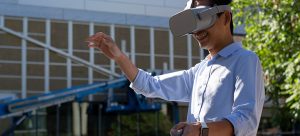
Engineers take detour to help immerse builders in their environments
What started as a project to enable researchers to virtually dive into their nanophotonics world has morphed into an exciting new venture.
Graduate Student Profile – Kishoare Tamanna, MASc ’18 (Civil)
Kishoare Tamanna’s research is focused on the effective utilization of recycled waste materials in concrete to reduce environmental loads and promote sustainable green concrete production.
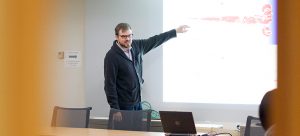
New research seeks to better transition Canada’s shipping industries to lower carbon fuels
Using computer modelling, researchers at UBC Okanagan are seeking to better understand the environmental and safety consequences of liquefied natural gas (LNG) system failures and spills.
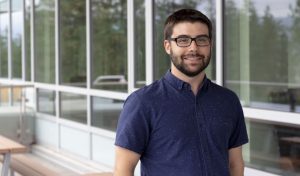
Graduate Student Profile – Connor Badowich, MASc ’18 (Electrical)
Connor Badowich researches Wireless Power Transfer (WPT), which involves using inductive coils to transfer power (on the order of Watts) across a gap of 20-40cm.

Bringing a European approach to Canadian transportation
A pair of visiting researchers are collaborating with the Sustainable Transport Safety Research Lab at UBC’s Okanagan campus to make the busy 6-lane divided Highway 97 (Harvey Avenue) through Kelowna more vibrant, aesthetic and safer.
Spotting imperfection before it occurs
Using 3D multi-scale multi-physics mathematical models, UBC Okanagan researchers have developed a process to predict when cracking will occur in fusion welding.

Making cryptocurrencies and blockchains even more secure
New research demonstrates the application of structured error-correcting codes to extend the maximum distance of QKD over standard fiber-optic cable up to 140 km.
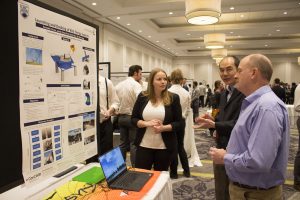
Students take kite energy to new heights
What goes up must come down and it has left an opportunity for a novel innovation from some UBC Okanagan Engineering students. As part of their fourth-year capstone project, a group of students designed a unique launching, docking and storing system for kite energy technology. With the growing focus on renewable energy around the World, […]

Results indicate home of tomorrow is more efficient and costs less
In their recent energy simulation, results indicate an over 95-percent reduction in greenhouse gas emissions for the owners of the “home of tomorrow”.