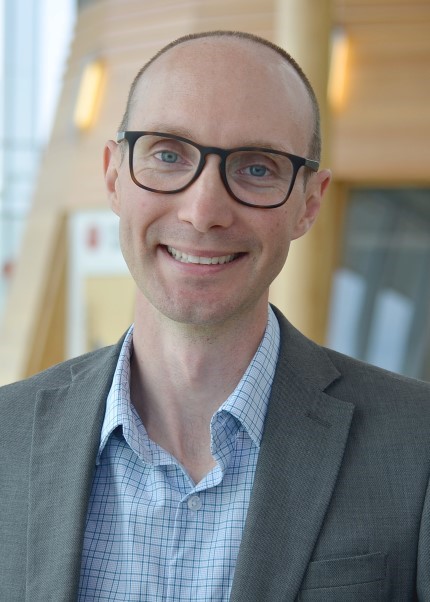
Tyler Finley

(He, Him, His)

Communications Manager

Engineering
Office: EME4241
Email: tyler.finley@ubc.ca


UBCO from the air

Students from UBC Okanagan and UBC Vancouver recognized for assistive technologies designed to improve lives and advance accessibility 

Student innovation, empathy and engineering ingenuity were on full display as teams from UBC’s Faculty of Applied Science claimed top honours at the 11th Annual Simon Cox Student Design Competition. 

Held on April 25 at the Blusson ICORD Centre in Vancouver, the competition challenged post-secondary students from across British Columbia to design technologies and home automation solutions that enhance quality of life for people living with disabilities. All told, twenty teams comprised of more than 110 students from institutions across the province vied for four awards.  

This year, UBC Engineering teams from both the Okanagan and Vancouver campuses swept the podium—earning recognition for their creative, human-centred designs. 

Winners 

  • 1st Simon Cox Principal Award $3,000: UBC Okanagan ODIN 
  • 2nd Achievement Award in honour of Marco Pasqua Second Prize $2,000: UBC Okanagan AceLace 
  • 3rd Innovation Award in honour of Ari Kinarthy $1,500: UBC MindTap 
  • Peer’s Choice Award in honour of Neema Nafisvand $1500: UBC Okanagan AceLace 

Blending technical excellence with meaningful community impact 

“These results reflect both the dedication and the compassion our students bring to engineering,” says James Olson, Dean of the Faculty of Applied Science at UBC. “Across both campuses, these teams demonstrated not only technical excellence, but a deep commitment to designing solutions that can really improve people’s lives and strengthen communities. We are incredibly proud of what they have achieved—and of the values-driven engineering education that made these innovations possible.” 

UBC Okanagan team earns Principal Award 

Taking the competition’s top honour, the Simon Cox Principal Award, was Team ODIN from UBC Okanagan for its Omnidirectional Drive for Independent Navigation. 

Designed to improve wheelchair traction, stability and mobility across uneven terrain, the lightweight, portable system addresses challenges associated with navigating gravel and other difficult surfaces. Compatible with approximately 90 per cent of wheelchair frames, the device aims to reduce physical strain while increasing safety and independence for users.

The team also recently competed and honed their project through the School of Engineering’s Capstone Design Showcase and Competition on April 10 in Kelowna.  

Team ODIN received the competition’s $3,000 Principal Award. 

Team ODIN members: Caden Lee, Gordon Zheng, Jaylyn Kaban, Advik Puri, Andrew Sheh and Ryan Pitre
Faculty mentor: Dr. Alon Eisenstein 

AceLace earns Achievement Award and Peer’s Choice recognition 

UBC Okanagan’s Team AceLace earned the Achievement Award in Honour of Marco Pasqua for its accessible shoelace ratchet system. 

The device functions as an attachment compatible with any laced shoe, enabling users to tighten their laces by turning a dial. Pulling upward on the dial disengages the ratchet mechanism to release tension. Designed to support individuals with dexterity or mobility challenges, the system offers a simple yet effective solution to an everyday task. 

The team received a $2,000 prize and was also recognized with the Peer’s Choice Award in Honour of Neema Nafisvand. 

Team AceLace members: Jules Ke and Ishita Julka
Faculty mentor: Dr. Sabine Weyand 

UBC Vancouver team recognized for brain-controlled accessibility technology 

Rounding out the podium, Team MindTap from UBC Vancouver earned the Innovation Award in Honour of Ari Kinarthy. 

MindTap is an EEG-powered assistive headset that enables individuals with physical disabilities to control smartphones using brain signals. The technology translates neural activity into real-time commands, allowing users to send messages, make calls, navigate applications and control smart devices without touch. 

Using non-invasive EEG data and machine learning, the system interprets intentional mental patterns and maps them to smartphone actions through a custom interface. Designed to adapt to users over time, MindTap reduces calibration requirements while promoting accessibility, independence and digital inclusion. 

The team received a $1,500 prize. 

Team MindTap members: Danish Hakim, Thomas Becaria Valero, Guneev Dhillon, Carter Stratton, Helia Ahmadzadeh and Vivian Qin
Faculty mentor: Calvin Kuo 

Designing with purpose 

The Simon Cox Student Design Competition continues to provide students with hands-on design experience while supporting the development of assistive technologies that respond to real-world needs. 

This year’s competition included students from BCIT, Simon Fraser University, Thompson Rivers University, UBC, UBC Okanagan and the University of Victoria. Participating teams partnered with individuals living with physical disabilities to ensure designs reflected lived experiences and practical needs. 

For UBC Engineering students, the strong showing highlights the power of experiential learning, interdisciplinary collaboration and community-focused design. 

Across both campuses, these award-winning projects demonstrate how engineering can be a catalyst for inclusion—turning creativity and technical skill into solutions that help make everyday life more accessible. 

Alon Eisenstein with winning team Map the System 2026

Dr. Alon Eisenstein with the winning team at 2026 UBCO Map the System Campus Finals.

Students, mentors, faculty and community members recently gathered at UBC Okanagan for the inaugural UBCO Map the System competition, a day focused on systems thinking, sustainability and exploring some of the world’s most complex challenges.

Hosted through the School of Engineering’s Technology Entrepreneurship program, the event invited interdisciplinary student teams to investigate deeply rooted social, environmental and economic issues—not by proposing quick fixes, but by examining the interconnected systems, relationships and structures that shape them.

The event is the culmination of several months of work, starting back in January, as students spent time and effort digging deeper into topics of their interest. The teams applied system thinking to research and generate system maps that capture what they have learned about the problems they studied, in addition to a 3000-word essay.

During the UBCO Map the System competition, each team delivered a 10-minute presentation in front of a panel of judges and the audience. The essays were scored by the judges in advance, while the presentations were scored during the event, producing the results of the competition.

Event Photos

View the photo gallery

Competition Results

1st Place – $500 cash prize and the opportunity to represent UBCO at the global Map the System competition at the University of Oxford this July

“Floods and Droughts Beyond Climate: Ecological Degradation, Extractive Economies, and Government Failures in Sumatra, Indonesia” by Alqeshira Feyza (Engineering), Aliyah Dafika (Data Science), Adzra Salma (Philosophy, Politics, and Economics), and Jasper Chiu (Engineering).

“We examined the recurring flood-drought crisis in Sumatra, Indonesia, asking why Sumatra faces severe floods in the rainy season and prolonged droughts in the dry season. Rather than treating this as a purely climate-driven problem, we used a systems-thinking approach to map the deeper social, political, economic, and ecological drivers behind it. Our research combined causal loop diagrams, stakeholder mapping, and the iceberg model with semi-structured interviews and secondary research from academic, NGO, and policy sources. Our key finding is that Sumatra’s crisis is rooted in a socio-ecological system shaped by extractive land use, global commodity demand, weak governance, and the normalization of disaster risk. We also found that many current responses remain reactive, addressing disaster impacts rather than the upstream drivers such as deforestation, peatland degradation, and concession-based land management.”

2nd Place – $300 cash prize

“The Cost of Convenience: Barriers to Campus Waste Diversion & Management in Kelowna, BC, Canada” by Amanda Bolton (Sustainability), and Laisa Peret (Sustainability).

“This report examines the key and self-perpetuating components of the recycling and waste management problem on the University of British Columbia Okanagan campus, which extends past the walls of our campus and points to a larger global issue. We uncovered how environmental sustainability challenges are driven less by a lack of solutions and more by human behavior, perception, and systemic complexity. We investigate recycling contamination, high levels of single-use waste driven by a convenience culture, and the communication gap between administration and university students. Through this analysis, the report situates local issues within broader patterns to identify key leverage points and advance to a more sustainable and equitable waste management system.”

3rd Place – $200 cash prize

“Industrial timber harvesting and the loss of primary forests in British Columbia” by Jasmeen Pandher (Engineering), and Cherry Huang (Engineering).

“We explored the forest management system in British Columbia and how it affects primary forests, the economy and the public. We used secondary resources to conduct our research and found that a shift in mental models is necessary to prevent further ecological deterioration.”

Impactful learning and collaboration

In addition to the student teams’ presentations, the event also featured a keynote and interactive LEGO® Serious Play® workshop led by Dr. Nadine Ibrahim, an Associate Professor, Teaching Stream, and the Turkstra Chair in Urban Engineering in the Department of Civil and Environmental Engineering at the University of Waterloo. Dr. Ibrahim is also a certified LEGO® Serious Play® facilitator and trainer.

“The UBCO Map the System Programme is more than a competition,” says event organizer Dr. Alon Eisenstein. “It was about building a community of students who chose to engage meaningfully and deeply with complex issues they care about, learn with and from one another, and having the courage to ask difficult questions. I’m incredibly proud of all our student participants, and so grateful for the mentors and supporters who helped make this inaugural program such a thoughtful and collaborative experience. Thank you and congratulations to everyone who joined us and made the event possible.”

Judges’ reactions

“The UBCO Map the System event was a truly delightful experience – I left feeling inspired and energized by the student presentations. The opportunity to engage with other attendees allowed for meaningful conversation and connections” – Antonia De Boer, Executive Director of Niteo Africa Society

“The event was inspirational; both to see the passion that student teams brought to the topic, and to create curiosity and reflection on addressing complexity and approaches to solving both global and local challenges.” – Stephanie Gnissios, Co-founder & COO of Climate Risk Services

About Map the System

Map the System is a global program created by the Skoll Centre for Social Entrepreneurship at the Saïd Business School at the University of Oxford, with partner institutions around the world hosting local competitions, offering participants the experience of applying systems thinking principles to dive deep into a social or environmental topic they are passionate about.

To learn more about UBCO Map the System, visit UBCO Map the System.

UBC Okanagan Civil Engineering Professor Dr. Zheng Liu

A UBC Okanagan School of Engineering professor has been awarded one of the Canadian Academy of Engineering (CAE)’s highest honours.

Dr. Zheng Liu, Professor of Civil Engineering, has been elected a CAE Fellow for 2026.

The Canadian Academy of Engineering is the national institution through which individuals, who have made outstanding contributions to engineering in Canada, provide strategic advice on matters of critical importance to Canada and to Canadians. The CAE is an independent, self-governing, and non-profit organization established in 1987.

Fellows of the CAE are nominated and elected by their peers, in view of their distinguished achievements and career-long service. Fellows of the Canadian Academy of Engineering are committed to ensuring that Canada’s engineering expertise and experience are applied to the benefit of all Canadians.

On May 11, CAE President Catherine Karakatsanis announced the election of fifty new Fellows and six new International Fellows at the Academy’s annual general meeting in Edmonton.

“I am delighted to welcome the new Fellows to the Academy whose impressive accomplishments and leadership in their respective fields have significantly advanced engineering in both Canada and around the world,” said Karakatsanis. “Their outstanding contributions and dedication to excellence serve as an inspiration to us all.”

Read the full announcement from CAE.

“I am deeply honoured to be elected a Fellow of the Canadian Academy of Engineering,” said Dr. Liu. “This honour reflects the work of an outstanding community, i.e., my collaborators across industry and academia, the remarkable students of my research group, and UBC’s supportive environment that has allowed our research to flourish. I share this recognition with all of them.”

“Congratulations to Dr. Zheng Liu on this exceptional and well-deserved recognition,” said School of Engineering Director Dr. Will Hughes. “Zheng’s career reflects not only extraordinary technical expertise and research leadership, but also a deep commitment to service, mentorship, collaboration and community impact. His dedication to excellence continues to elevate our School and inspire those around him. We are proud and grateful to count Zheng among our faculty.”

This prestigious award is not the first for Dr. Liu this year in recognition of his extraordinary impact in research, industry engagement and leadership in the field:

In March, he received the Non-Destructive Evaluation (NDE) Lifetime Achievement Award from SPIE, the international society for optics and photonics and was also named a Boeing Visiting Professor. He also recently received the IEEE Instrumentation and Measurement Society Best Application Award for “Multi-Measurement and Instrumentation Fusion for Pipeline Integrity Management.”

UBCO Outstanding Instructor Graphic

Three School of Engineering (SoE) faculty members have been honoured with UBC Okanagan’s 2025/26 Outstanding Instructor award.

The SoE’s Dr. Nicolas Peleato, Ph.D. candidate Zahra Sarpanah Sourkouhi, and Dr. Mohammad Tiznobaik are among 29 instructors from across UBCO to be recognized. Read the full list from the Office of the Provost and Vice-President Academic.

The Outstanding Instructor Award recognizes exemplary instructors within each Faculty for their teaching over the past three years, with emphasis on the most recent academic year, based on an assessment of their teaching conducted by the Faculty in which they are appointed.

“Congratulations to Zahra, Mohammad, and Nicolas on this well-deserved recognition,” said School of Engineering Director Dr. Will Hughes. “Each of you demonstrates the care, creativity, and commitment that define excellent engineering education. Your dedication to student learning is clear, your impact is appreciated, and your example helps elevate us all. Thank you for modelling our school values and for making a meaningful difference in the lives of our students.”


Dr. Nicolas Peleato

Nicolas Peleato Dr. Nicolas Miguel Peleato is an Associate Professor in the School of Engineering at UBCO. He received his PhD from the University of Toronto for his research on advanced characterization of organic matter for the evaluation of drinking water treatment processes and assessing source water quality. This research extended into a postdoctoral fellowship evaluating the role and mechanisms of protein conformation on membrane fouling on a fundamental level of model compounds.  Furthermore, he has focused on integrating data analysis and machine learning methods to leverage insights into water quality. The ultimate goal of his research is to find low-cost and simple pre-treatment methods to improve drinking water treatment systems.

Outside academia, Dr. Peleato worked for an environmental engineering firm specializing in issues related to drinking water treatment systems where he played a lead role in designing leachate collection systems, portable drinking water distribution systems for large-scale events.

Within his research group at UBC, Dr. Peleato seeks to advance the technology, evaluation and monitoring of drinking water treatment through integrated large-scale data analysis and hands-on research to further understand fundamental mechanisms relevant to advanced water treatment operations.

Dr. Peleato is an accredited professional engineer and a member of the American Water Works Association.


Zahra Sarpanah Sourkouhi

ZahraZahra Sarpanah Sourkouhi is a Ph.D. candidate, graduate research assistant, and sessional lecturer at UBCO. She has served as the lab manager for the Okanagan MicroElectronic and Gigahertz Applications (OMEGA) lab under the supervision of Professor Zarifi.

Her main research is focused on material characterization, additive manufacturing for novel fabrications of microwave components, and the study of the performance of 2D MXene material at high frequencies and thermal impact. Her research background involves investigating microwave ring resonators and transmission lines sensitive to visible light illumination. She has been contributing to publications in multiple academic journals, including T-MTT, Small, and Advanced Materials Technologies, and assisting in writing academic and industrial proposals. Her teaching experience is related to VLSI and circuit analysis at Cadence (ENGR 466).

She serves as a reviewer for IEEE Sensors (Journal, Letter, and conference). She received the prestigious 2025 APS Professor Mojgan Daneshmand grant and was selected as the first-place award for Excellence in Microsystem Fabrication at the TEXPO 2025 CMC microsystem competition. She has background in data classifications and clustering and has job experience in the automotive industry as an R&D engineer with the responsibility of designing test circuits for electronic vehicle components. She is a member of the MTT-S TC-17 Microwave Materials and Processing Technologies volunteer Committee, IEEE Young Professionals, Women in Engineering, Women in Microwave, and MTTS student ambassadors. Her volunteer contribution involves attending mentorship programs when required by the university or the research group.


Dr. Mohammad Tiznobaik

Mohammad TiznobaikDr. Mohammad Tiznobaik is a lecturer in the School of Engineering at UBCO. He previously also served as a Postdoctoral Research Fellow here. Dr. Tiznobaik is a member of the American Concrete Institute (ACI) and brings 30 years of combined industrial and academic experience in design and construction engineering, including work on large-scale projects.

His research focuses on the behavior and curing of concrete pavements, the design and performance of cementitious materials, and the durability of concrete infrastructure under chemical and physical damage mechanisms.

Dr. Tiznobaik is the recipient of the 2025 Provost’s Award for Teaching Excellence and Innovation, recognizing his outstanding contributions to engineering education. He is also a distinguished recipient of the ACI Wason Medal for Materials Research (2020), one of the most prestigious honors in concrete research. Additional accolades include the University of Manitoba Graduate Fellowship (2015–2018) and the Gordon P. Osler Graduate Scholarship (2015).

Dr. Tiznobaik earned his Bachelor’s degree in Civil Engineering in 1996, followed by a Master’s in Structural Engineering and a Ph.D. in Concrete Materials from the University of Manitoba in 2014 and 2018, respectively. He is a licensed Professional Engineer in British Columbia, Canada.

UBCO Map the System

Making change in a complex world: UBCO students invited to Map the System 

The world’s most pressing challenges cannot be solved through a single lens. 

Human rights. Climate change. Waste management. Urban resilience. These are issues shaped by interconnected systems—where policy, economics, environment, infrastructure and human behaviour all intersect. 

This spring, UBC Okanagan students are invited to take on those complexities through the inaugural UBCO Map the System Competition Showcase, an event that highlights systems thinking, sustainability and interdisciplinary problem solving. 

UBCO Map the System 

  • Date: May 15, 2026
  • Time: 10 a.m. – 2:30 p.m.
  • Location: UNC200, UBC Okanagan Campus
  • Cost: Free 
  • Open to: UBCO students, faculty and staff; community members

Learn more

Register

The showcase invites the campus and wider community to explore how students are examining complex global issues through research, mapping and systems-based analysis. 

Developed through the School of Engineering’s entrepreneurship and innovation ecosystem, Map the System challenges students to move beyond surface-level solutions and instead understand the deeper forces that shape persistent societal problems. 

“Engineering increasingly requires us to understand complexity as opposed to trying to solve isolated technical problems,” says Dr. Alon Eisenstein, Associate Professor and Entrepreneurship Lead with the UBC Okanagan School of Engineering.

“Map the System encourages students to think more deeply about interconnected challenges and to recognize the value of systems-level understanding in creating lasting impact.” 

Student teams are asked to investigate interconnected drivers, stakeholders, policies and unintended consequences—developing a richer understanding of how meaningful change can occur. 

This year’s competing projects span a diverse range of topics, including: 

  • Economics & Rights — The Powerplay of Indigenous Economics, Rights & Freedom 
  • Natural Resources — Industrial timber harvesting and the loss of primary forests in British Columbia 
  • Campus Sustainability — The Cost of Convenience: Barriers to Campus Waste Diversion & Management in Kelowna, B.C. 
  • Ecological Policy — Extractive Economies and Government Failures in Sumatra, Indonesia 

Prizes 

UBCO Map the System finalists will take home cash prizes and advance to the global semi-finals. 

UBCO Map the System Campus Finals 
  • 1st Prize – $500 cash prize – AND The 1st place winning team will be invited to attend the global finals. 
  • 2nd Prize – $300 cash prize 
  • 3rd Prize – $200 cash prize 
Map the System Global Final 

The Global Final will take place on July 9 – 12, 2026 in Oxford England at the University of Oxford 

  • All campus finalist teams will compete at the global semi-final event 
  • The top teams will compete in the final for prize monies:
    • 1st Prize – £5,000 cash prize
    • 2nd Prize – £4,000 cash prize
    • 3rd Prize – £3,500 cash prize 

Innovation through systems thinking – and serious play 

Nadine Ibrahim

Dr. Nadine Ibrahim

The event will feature student presentations, expert judging, networking opportunities and a keynote presentation and workshop led by Dr. Nadine Ibrahim, Associate Professor and Turkstra Chair in Urban Engineering at the University of Waterloo. 

Dr. Ibrahim’s work bridges engineering education, sustainability, resilience and climate adaptation. 

Her keynote, “Mapping World Cities Towards Sustainability and Beyond,” will explore how systems-based thinking can support resilient urban futures. 

Participants will also take part in an interactive LEGO® Serious Play® activity focused on moving beyond sustainability toward resilience. 

A showcase of learning, curiosity and collaboration 

The day begins with welcome remarks and student judging sessions before transitioning into lunch, networking and the keynote workshop. 

The competition concludes with the announcement of winners and closing reflections. 

The event also brings together a panel of community and industry judges, including: 

  • Leanne Hammond, Executive Director, Community Foundation North Okanagan 
  • Stephanie Gnissios, Co-Founder and COO of Climate Risk Services 

While this is the inaugural year of UBCO hosting a Map the System campus competition, this is the third year UBCO students have participated. Past teams from 2025 and 2024 have gone on to compete nationally and internationally.  

FortisBC and UBCO Engineering representatives at UBCO
UBC Okanagan School of Engineering and FortisBC celebrate a decade of partnership and impact

It was a day not only to celebrate innovation in clean energy research, but to recognize that the future is in good hands.

Leaders from UBC Okanagan’s School of Engineering and FortisBC recently gathered to mark more than a decade of meaningful collaboration and impact.

The event brought together researchers, students and partners to reflect on a relationship defined not only by investment, but by shared purpose—advancing applied research, supporting student learning and delivering practical solutions for British Columbia’s evolving energy landscape.

Watch the video

A partnership rooted in purpose

In her opening remarks, Dr. Suzie Currie, Vice-Principal and Associate Vice-President, Research and Innovation, spoke to the importance of partnerships in advancing both research excellence and real-world outcomes.

“What we have built together goes well beyond funding. It is a relationship grounded in shared purpose—a commitment to innovation, sustainability and community impact. The impact is tangible here in our region, across British Columbia, and increasingly on a global stage.”

Dr. Currie emphasized that partnerships like FortisBC’s expand what’s possible—supporting applied research in clean and smart energy systems, hydrogen and carbon solutions, while shaping the next generation of engineers through hands-on, meaningful learning experiences.

Remarks from FortisBC leadership reinforced this shared vision. CEO Roger Dall’Antonia and Vice President Energy Supply and Resource Development Joe Mazza spoke to FortisBC’s pride in working alongside UBC Okanagan—highlighting the value of advancing meaningful, applied research with tangible impact in the communities they serve.

Joe Mazza from FortisBC speaks at UBCO

Joe Mazza, FortisBC’s Vice President Energy Supply and Resource Development

Over the past ten years, the partnership has generated significant impact:

  • $3.14M invested by FortisBC
  • $3.4 million leveraged through matching partners such as MITACS
  • 52 students trained
  • 73 scholarly publications
  • 26 industry collaborations supported

As the School of Engineering’s Director of Research & Industry Partnerships Colin Wilson noted, these numbers tell only part of the story. Behind them is a growing ecosystem connecting industry, academia and community to tackle complex energy and sustainability challenges together.

“We are deeply grateful to FortisBC for its investment and partnership. What it enables our professors and instructors to do is nothing short of amazing. It’s game-changing. And there is no better illustration than the success of our highly trained students—and the young people gaining early STEM experiences through FortisBC’s support,” said Wilson.

Advancing research for a clean energy future

Prof. Kasun Hewage speaks at UBCO

Dr. Kasun Hewage, UBCO Civil Engineering Professor and FortisBC Smart Energy Chair

Attendees heard from leading UBC Okanagan researchers whose work has been enabled—and amplified—through this partnership.

Dr. Kasun Hewage, FortisBC Smart Energy Chair, highlighted research advancing lifecycle thinking in infrastructure, smart cities and net-zero energy systems—developing tools and frameworks to guide sustainable urban development.

Dr. Joshua Brinkerhoff (H2 Lab Phase 1 & 2) shared progress on hydrogen systems research, including blending, storage and safety—key to supporting British Columbia’s transition to low-carbon energy.

Dr. Dimitry Sediako (H2 Lab Phase 3) showcased advancements in hydrogen materials and infrastructure, including testing capabilities to better understand hydrogen embrittlement in pipelines.

Dr. Lukas Bichler (H2 Lab Phase 4) explored emerging applications of hydrogen-derived materials, including solid carbon for industrial uses, while building collaborations with First Nations and global partners.

Together, these efforts reflect a coordinated, multi-phase research ecosystem building capacity, infrastructure and knowledge for a clean energy future.

Inspiring the next generation

Geering Up team speaks at UBCO

FortisBC’s support is helping UBCO expand its Geering Up program for youth

The partnership’s impact extends well beyond research labs.

Through FortisBC’s support of Geering Up Engineering outreach, hundreds of youth and educators have engaged in hands-on STEM experiences—building confidence, curiosity and pathways into engineering.

This support has expanded camps, workshops and outreach programs across the region, including initiatives like Go ENG Girl and programming with Indigenous communities, most recently with the Osoyoos Indian Band.

Attendees also experienced a live Geering Up demonstration, where the team created an edible water bottle—an engaging example of how energy, physics and fun come together for young learners.

Geering Up Program Assistant Manager Adam Cornford noted:

“A huge thank you to FortisBC. These programs are bringing energy conservation and efficiency education to more learners across the region. It’s helping build confidence, curiosity and a sense of belonging.”

A partnership that builds people, not just projects

Closing the event, School of Engineering Director Dr. Will Hughes reflected on what makes the partnership truly distinctive.

“What we have heard today is more than a list of projects or milestones. This is a transformative partnership. It’s locally rooted, grounded in the needs of this region, and creating impact far beyond it.”

He emphasized its generational impact:

“Through your support, FortisBC is helping us build not only knowledge, but capacity, talent and momentum: the engineers who will shape our communities, industries and clean energy future.”

Looking ahead

As UBC Okanagan and FortisBC look to the future, the foundation built over the past decade offers a powerful platform for continued collaboration.

It is a partnership defined not only by what has been achieved, but by what is still possible—measured not just in dollars, but in meaningful impact on people and place.

3MT Finals participants

School of Engineering PhD students showcase sustainable solutions at UBCO 3MT Finals

Congratulations to UBC Okanagan School of Engineering (SoE) PhD Students Rubaiya Rumman and Fatemeh Niknahad who represented the SoE at UBCO’s Three Minute Thesis (3MT) Finals on April 14 at the Mary Irwin Theatre in Kelowna.

Rubaiya Rumman was awarded Runner Up overall and Alumni UBC People’s Choice Award as selected by the audience.

Rumman’s day was especially momentous—in the morning, she successfully defended her PhD thesis entitled “Wood-Ash Modified Low-Carbon Cementitious Composites and Concrete.” Her groundbreaking research advances sustainable construction by transforming industrial by-products into innovative, low-carbon building materials. That evening, she distilled that three hour thesis defence into just under three minutes on stage.

Rumman’s PhD supervisor Dr. Shahria Alam was in the audience to cheer her on, noting: “Rubaiya is an outstanding student. She has incredibly high expectations for herself and always exceeds. We are so proud of what she has accomplished through her studies, from winning many awards and scholarships to the quality of her research. We know she will continue to accomplish great things and inspire our School.”

When asked how she felt after the competition, Rumman said: “Relieved! I wasn’t as nervous as I expected to be. Defending my thesis earlier in the day took the pressure off in some ways, so I could just show up and get through the three minutes tonight. It was an incredible day, and I was honoured to be part of the 3MT competition.”

WATCH PRESENTATION

Fatemeh Niknahad was also a crowd favourite for her presentation Microwave Ice Sensor. Her project explored building a smart, durable sensor that can detect black ice as it forms, to improve road safety in cold climates, such as Canada’s North.

“Participating in 3MT was a truly rewarding experience. It challenged me to step back from the technical details and focus on the broader impact of my research. It was also a big personal milestone for me and gave me a new sense of confidence,” said Niknahad.

Watch presentation

She is currently completing her PhD supervised by Dr. Mohammad Zarifi, who said:

“3MT is a powerful platform that challenges graduate students to communicate complex research clearly and concisely beyond academia. It encourages students to engage with industry and society by developing essential skills in storytelling, public speaking, and knowledge translation. By building confidence and clarity, 3MT prepares participants to effectively showcase the real-world impact of their work.”

Added Dr. Zarifi: “Fatemeh has demonstrated outstanding and remarkable progress in her thesis while also delivering a strong performance in the 3MT competition, making OMEGA Lab proud of her achievement.”

Rumman and Niknahad presented alongside seven other finalists from graduate studies programs across UBCO to an esteemed panel of judges from the City of Kelowna, UBCO’s Academic and Career Advising Office and UBC Venture Finance Mentoring program.

The event was emceed by Dr. Sabre Cherkowski, Associate Dean, College of Graduate Studies. UBCO’s Principal and Deputy Vice Chancellor Dr. Lesley Cormack and Dean of the College of Graduate Studies also spoke about the quality of the students’ research. The audience was treated to a research presentation by UBCO Postdoctoral Research Fellow Dr. Seth McCarthy from the Faculty of Health and Social Development.

What is 3MT?

The Three Minute Thesis (3MT®) is a global academic competition started by The University of Queensland (UQ), Australia in 2008. Since then, the competition has spread throughout universities across the globe.

The competition showcases students’ innovative research while helping students develop effective presentation and communication skills. Research-based master’s and doctoral students are challenged to present their research in a mere 180 seconds using just one static slide.

The judges look for clear language, a well-structured presentation that engages the audience, and a slide that is designed to support the speaker’s points.

At UBC Okanagan, 3MT is organized by the College of graduate studies. Learn more on the event page.

APSC 171 Students

Students impress at annual APSC 171 Design Showcase 

Students in the Applied Science 171 course at UBC Okanagan (UBCO) School of Engineering showcased their skills and knowledge in an exciting and fast-paced design competition on April 9. 

“As one of the School’s long-standing flagship design showcase competitions, this annual event remains a hallmark of creativity, innovation, and experiential learning within our engineering program,” said Dr. Ray Taheri, Professor of Teaching. “Over the years, this showcase has become not just an important academic event, but one that builds community as well. It highlights the ingenuity of our students while reinforcing the School’s commitment to design-based education and socially relevant engineering practice.”  

This year, two timely and highly consequential design themes were selected. The first focuses on supporting older adults in their daily lives and enhancing overall quality of life through thoughtful, practical, and user-centred engineering solutions.  

The second addresses the urgent challenge of climate change and its wide-ranging impacts. Projects under this theme may explore issues such as wildfire mitigation, flood resilience, reduction of individual and community carbon footprints, and approaches to more sustainable living.  

Together, these themes encourage students to engage with pressing societal issues and to consider how engineering design can contribute meaningfully to human well-being and environmental stewardship.  

APSC 171 students and faculty

This year, a total of 70 student groups participated, whittled down to the top 20 teams that advanced to the live competition on April 9. The event was attended by numerous community and industry leaders who served as judges, including City of Kelowna Councilors Ron Cannan and Loyal Woolridge.  

“The event is designed not only to celebrate outstanding design work but also to provide students with valuable experience in communication, presentation, and the defence of their ideas before a professional audience,” explained Dr. Taheri. “The skills they build and demonstrate today they will carry and continue to hone throughout their education and long after they graduate.” 

Adds Taheri: “On behalf of the School of Engineering, we’re incredibly proud of all the students who participated. Great job, everyone. Congratulations to all of this year’s winners.” 

APSC 171 Design Showcase has been an integral part of the first-year engineering experience since the School’s inception and the opening of UBC Okanagan in 2005. This year marks the 21st year in a row that Dr. Taheri has coordinated the event.  

“The APSC 171 Design Showcase is a powerful – and empowering – way to cap off the first-year engineering experience at UBC Okanagan,” said Dr. Will Hughes, Director of the School of Engineering. “Our students are already demonstrating creativity, empathy and a deep commitment to solving real-world challenges. I want to recognize Dr. Ray Taheri for his leadership and dedication to this event over the past two decades, along with all our faculty, staff, students and friends from the community who make this impactful day possible.” 

TEAM VIDEOS

Watch video presentations from this year’s top teams: 

https://www.youtube.com/watch?v=0tXWUnB15zk  (Top 4 SolidWorks projects) 

https://www.youtube.com/watch?v=HH4UB2lYxKA  (Pillbox, aiming to patent it) 

https://www.youtube.com/watch?v=lt5EAFQ0Eb8  (Landslide-Detect) 

https://youtu.be/-IA-H5JUbto?si=Yg024ar_IsgK-2xM  (Stabilizing Pen, aiming to patent it)  

https://www.youtube.com/watch?v=u4lnUT–uIo  (Buoy, floating water quality data collection) 

View the photo gallery 

Man in front of glass

Dr. Feng’s projects explore security and reliability of quantum and cryptographic systems

The School of Engineering at UBC Okanagan is proud to recognize Dr. Chen Feng, Associate Professor of Electrical and Computer Engineering, on receiving two NSERC Alliance International Catalyst Quantum grants—an achievement that underscores both the strength and momentum of quantum research at UBC Okanagan.

Dr. Feng is one of four UBC researchers funded in this national competition, and the only researcher in this round to receive multiple Alliance Quantum grants.

Together, these awards – valued at $25,000 each – support two complementary projects at the forefront of quantum computing and cryptography, fields that are rapidly shaping the future of secure communications, critical infrastructure, and advanced technologies.

One project focuses on strengthening the security and reliability of quantum and cryptographic systems, developing rigorous methods to verify correctness and trustworthiness in emerging technologies such as threshold signatures. The second tackles a key challenge in quantum computing: designing methods that are both practically implementable and provably secure, helping to reduce the cost and complexity of fault-tolerant quantum systems.

For both projects, Dr. Feng is working in close collaboration with leading international partners, bringing together expertise that does not exist in any single institution. These partnerships will accelerate progress on foundational challenges, while creating valuable training opportunities for Canadian students and postdoctoral researchers.

“These projects are about building trust in the next generation of computing systems,” said Dr. Feng. “By combining rigorous theory with practical design, we aim to make quantum and cryptographic technologies both secure and deployable in real-world settings. This work is inherently collaborative, bringing together complementary expertise from our international partners while creating meaningful opportunities for our students and postdoctoral researchers to contribute at the frontier.”

Beyond advancing theory, the projects are designed to deliver practical impact: producing new frameworks, prototype systems, and openly shared research that will help position Canada as a leader in secure and scalable quantum technologies.

“Ultimately, our goal is to develop solutions that not only advance fundamental knowledge in quantum research, but also deliver lasting impact for Canada’s digital and critical infrastructure,” said Dr. Feng.

“This is a significant achievement for Dr. Feng and for our School,” says Dr. Will Hughes, Director of the School of Engineering. “Chen’s work sits at the intersection of security, mathematics and emerging quantum technologies, areas that are increasingly vital to Canada’s future. These projects not only deepen UBC Okanagan’s research strength in this area, they also contribute meaningfully to Canada’s quantum ecosystem at a critical moment.”

Dr. Kasun Hewage

The Canadian Society of Senior Engineers (CSSE) has bestowed one of its highest honours upon a UBC Okanagan School of Engineering faculty member.  

Dr. Hewage, Professor of Civil Engineering, has been named a CSSE a Fellow in recognition of more than two decades of distinguished service, leadership and impact in the engineering profession. He is also a Fellow of the Engineering Institute of Canada, and Canadian Society for Civil Engineering.  

This prestigious designation is awarded only to engineers who have demonstrated exceptional achievement in engineering practice or education, and who have made significant contributions to their field. 

“I am truly honored to be a Fellow of the CSSE,” said Dr. Hewage. “There is nothing more satisfying in life than seeing the direct positive impacts of my contributions to the society; and successes of my HQP in both academia and industry, and their personal lives.” 

Dr. Hewage is widely recognized for his leadership in sustainable infrastructure, life cycle management and smart energy systems. His work sits at the intersection of climate action, resource management and resilient infrastructure—helping communities develop practical, scalable solutions to global challenges. 

“On behalf of the School of Engineering, congratulations to Dr. Kasun Hewage on this well-deserved honour,” said SoE Director Dr. Will Hughes. “Kasun’s election as a Fellow of the Canadian Society of Senior Engineers is a reflection of the depth and impact of his work, and the leadership he brings to our School and broader community. His commitment to advancing sustainable engineering solutions, grounded in real-world application and meaningful partnerships, embodies the very best of what we strive for at UBC Okanagan.”  

About Dr. Kasun Hewage 

Dr. Hewage holds the FortisBC Smart Energy Chair at UBC Okanagan and is also Associate Director of UBC’s Clean Energy Research Centre. A recognized leader in life cycle management of built assets, green construction and smart energy planning, his research has informed key policies and practices, including the BC Energy Step Code, FortisBC energy initiatives and municipal transit electrification strategies.  

He brings extensive interdisciplinary experience from both academia and industry, with research spanning sustainable construction, circular economy, and the energy–carbon nexus in infrastructure systems.