Tyler Finley

(He, Him, His)

Communications Manager

Engineering
Office: EME4241
Email: tyler.finley@ubc.ca


Dr. Jian Liu

Dr. Jian Liu, Associate Professor at UBC Okanagan School of Engineering in the Battery Innovation Centre.

Many of the devices we rely on in our daily lives—from the batteries in our phones to our laptops and vehicles—have one thing in common: the need for energy storage. Researchers at UBC Okanagan (UBCO) are now even better positioned to makes strides in designing, building and testing the next generation of batteries thanks to a major investment from the Canadian Foundation for Innovation (CFI)’s Innovation Fund.

Dr. Jian Liu, an Associate Professor with UBCO’s School of Engineering, is an internationally renowned leader in emerging battery technologies. He is focused on finding clean energy solutions through pioneering batteries that make use of new materials and techniques—making them both safer and more efficient.

As announced today by CFI and UBC Okanagan’s Office of the Vice-President, Research and Innovation, Dr. Liu and his team have received more than $2.6 million in new funding from CFI’s Innovation Fund. This support builds on investment from BC’s Innovative Clean Energy Fund in 2024, which helped launch the Battery Innovation Centre at UBCO.

“UBCO’s Battery Innovation Centre will play a key role in advancing this important battery research and establishing our university and our region as a powerhouse in clean energy innovation,” said Dr. Liu. “It will provide us the necessary space and the most advanced equipment to create and test battery prototypes on a larger scale, and be a critical hub for ideating, testing and building next-generation battery technology.”

“The Battery Innovation Centre is a unique space where education, training and collaboration between industry, government and academic partners all comes together to advance Canada’s clean energy ecosystem,” said Dr. Will Hughes, Director of the School of Engineering at UBCO. “Congratulations to Dr. Liu and his team on this significant support which speaks to both the excellence and importance of their work. On behalf of the School of Engineering, we are deeply grateful to CFI for this investment. It will help us continue to establish the Centre as a contributor to a stronger, more sustainable Canadian battery supply chain.”

Read more in UBC’s article about the Battery Innovation Centre.

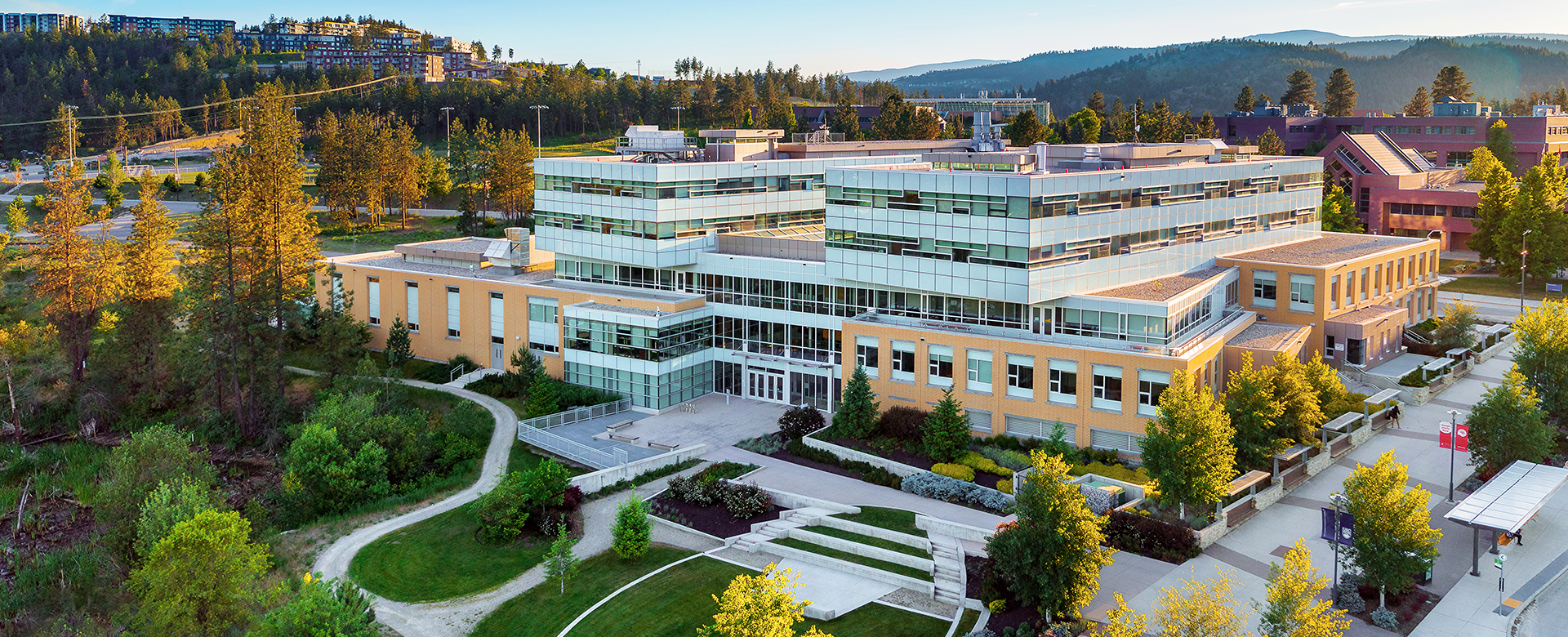
EME aerial

Two researchers within the UBC Okanagan School of Engineering (SoE) have been awarded UBC Killam Faculty Research Fellowships. These awards enable faculty to pursue full-time research during a recognized study leave.

Dr. Anas Chaaban and Dr. Mahmudur Fatmi are among the 2025 recipients—ten in all across UBC—of the prestigious fellowships announced today by the Office of the VP Research and Innovation (VPRI) in Vancouver.

“Congratulations to Dr. Anas Chaaban and Dr. Mahmudur Fatmi on this significant and well-deserved recognition. Your exemplary work lifts up our School and UBCO. Kudos to and your teams for driving innovation and making a true impact in your fields and in the world around us,” said Dr. Will Hughes, Director, School of Engineering.

Dr. Anas Chaaban

Dr. Chaaban

Dr. Anas Chaaban, Associate Professor of Electrical Engineering, conducts research at the interface between communications engineering and information theory, with applications in wireless communications, sensing, and related applications.

He leads the Communication Theory Lab at UBCO, which is focused on Intelligent surfaces for wireless communications (RIS, SIM); communications and sensing; network information theory; coding theory and applications; and machine learning in communications.

“This award is a reflection of UBC’s commitment to focusing on people and impactful research,” said Dr. Chaaban. “It recognizes the excellent work of my team and collaborators, to whom I owe this recognition. It will allow me to explore new collaborations for further strengthening the research potential and impact of UBC’s Okanagan Campus.”

Read more about Dr. Chaaban.

Dr. Mahmudur Fatmi

Dr Fatmi at UBCO

Dr. Mahmudur Fatmi is an Associate Professor of Civil Engineering at UBC Okanagan.

Dr. Mahmudur Fatmi is an Associate Professor of Civil Engineering whose research area is transportation demand modelling. He develops theory- and data-driven methods to understand travel behaviour, in addition to agent-based microsimulation techniques to test alternative transportation and land use policies, and infrastructure investment decisions.

At UBCO, he is the director of the UBC integrated Transportation Research (UiTR) laboratory. He is the Principal Investigator (PI) of Climate Mobility Research (CliMR) Network—a group of multi-disciplinary researchers from both UBC campuses and community partners across British Columbia, who focuses on generating data, models and tools to decarbonize the transportation sector. He also leads the Climate Action Hub for Community-based Computational Research—a multi-disciplinary research cluster to tackle climate mitigation and adaptation challenges.

“I am very thankful for this recognition and proud of the hard work that made this possible,” said Dr. Mahmudur Fatmi. “I am grateful to my students, collaborators, external partners, and SoE for their support. This Fellowship will support innovation in developing statistical and microsimulation methodology to advance travel modelling paradigm through international and local collaborations.”

Read more about Dr. Fatmi.

UBC Okanagan Campus from the air

Registration is now open for Startup Sprint 2026, an intensive, high-energy weekend experience held from Mar. 13-14, 2026. This event is designed to help participants transform ideas into impact-driven ventures by tackling real-world challenges at the intersection of STEM, entrepreneurship, and society.

Startup Sprint 2026 is free and open to anyone in the community who is ready to commit to a full weekend of startup activity. Meals are provided, and space is limited.

Register

Visit the event page

Schedule

Attendance Schedule with meals provided each day:

  • Friday, March 13th  5pm – 9pm
  • Saturday, March 14th  9am – 8pm

Hosted by the UBC Okanagan School of Engineering, Startup Sprint brings together a diverse mix of participants—from undergraduate students and graduate researchers to faculty members, local business owners, and community members who are curious about entrepreneurship. Over the course of a single weekend, participants work in interdisciplinary teams to develop, test, and refine startup ideas under real-world time constraints.

The program will provide a hands-on living entrepreneurship laboratory where participants gain practical experience in venture creation while developing essential skills such as collaboration, brainstorming and ideation, group productivity, and decision-making under pressure.

Startup sprint banner

“Startup Sprint is about more than building a company—it’s about empowering people to apply their technical expertise and creativity to problems that truly matter,” says Dr. Alon Eisenstein, event organizer and faculty member in the UBC Okanagan School of Engineering. “In just one weekend, participants experience the intensity, teamwork, and learning that define entrepreneurship, while connecting with a community that is passionate about innovation and impact.”

In addition to learning how to pursue and build a new venture, participants are exposed to cross-disciplinary perspectives and mentorship, helping them explore entrepreneurship as a viable pathway, whether they are early in their academic journey or well established in their careers.

The program is organized through the UBC Okanagan School of Engineering, with financial support from ETSI-BC (Economic Trust of the Southern Interior) and WeBC, and with support from the Government of Canada through the Women Entrepreneurship Strategy. Dr. Eisenstein is co-leading the event alongside Evangelos (Gelly) Gnissios, and the organizing team is working to ensure an engaging and memorable experience for all participants.

Canadian and Indian leaders meet to discuss post-secondary partnerships

The following story was published via UBC News and is being re-shared here as it features UBC Okanagan’s School of Engineering.

The UBC South Asia Hub, a new partnership with ATLAS SkillTech University, and a $4-million investment in scholarships for outstanding Indian students were announced as part of Prime Minister Mark Carney and Foreign Affairs Minister Anita Anand’s visit to India.

The University of British Columbia is launching a permanent South Asia Hub to deepen academic and research collaboration between Canada and India. The Hub is a coordinated platform designed to deepen research collaboration, academic partnerships, and talent development between Canada and India.

UBC also signed a new partnership with ATLAS SkillTech University to strengthen transnational education, and more than $4 million in entrance scholarships for outstanding Indian undergraduate students.

These initiatives were announced Feb. 28 in Mumbai as part of the federal government’s launch of the Canada-India Talent and Innovation Strategy, which positions education and research partnerships as pillars of innovation and long‑term cooperation between the two countries. This strategy will reinforce collaboration through opportunities for students and researchers, drive economic growth and deepen the strong people-to-people ties that connect the two countries. The announcement also included the creation of a Canada-India Talent and Innovation Task Force, supported by Universities Canada and university leaders from both countries.

“Canada and India are natural partners in education, innovation and research,” said Foreign Affairs Minister Anita Anand. “Canada welcomes the new Canada-India Talent and Innovation Strategy that will create opportunities for students and researchers, drive economic growth, and reinforce the strong people-to-people ties that connect our two countries.”

“UBC’s expanded engagement in India reflects our belief that the most important challenges of our time are global in nature—and that universities play a central role in advancing solutions through purposeful partnerships,” said UBC President and Vice-Chancellor Benoit-Antoine Bacon. “By strengthening collaboration in India across education, talent development, innovation and research, we are creating meaningful opportunities for students and scholars in both countries to work together, share expertise and generate impact that extends far beyond our campuses.”

Strengthening academic collaboration and pathways

The UBC South Asia Hub began as a pilot focused on talent development, student mobility, partnerships and alumni engagement across South Asia. As part of today’s announcement, it will soon expand to become a coordinated platform supporting research collaborations, academic partnerships, and industry engagement between Canada and India.

UBC also signed a statement of cooperation with ATLAS SkillTech University on Feb. 27. ATLAS SkillTech University—India’s first urban multidisciplinary university located in the heart of Mumbai’s business district—is focused on bridging academia and industry through a range of programs, including design, management, entrepreneurship, technology and law.

The UBC-ATLAS partnership is focused on collaboration with UBC Okanagan’s School of Engineering and Faculty of Management, creating opportunities for joint programming and academic pathways, including a dual-degree program, and research exchanges between the two campuses.

“Global partnerships create opportunities not only for research collaboration, but for deeper understanding across cultures and perspectives,” said UBC Okanagan Provost and Vice-President, Academic pro tem, Marie Tarrant. “By working alongside colleagues and students at ATLAS, we are strengthening academic connections and creating space for diverse approaches to learning, innovation and problem-solving.”

“The future of higher education is borderless,” said ATLAS SkillTech University Chancellor and Founding President Indu Shahani. “By partnering with UBC, we are creating an academic continuum that begins in India and extends to the global stage—empowering our students to learn locally and compete internationally.”

In addition, UBC is committing $4 million toward scholarships for high-achieving Indian students for the 2026 Winter intake.

“Expanding access to high-quality education and meaningful academic pathways is central to our work,” said Damara Klaassen, executive director of UBC’s International Student Initiative. “By investing in students, we are strengthening academic connections between our institutions and creating opportunities for learners to engage across cultures and communities.”

Since the 2020 Winter intake, UBC—through its International Student Initiative merit-based entrance awards program—has offered over $89 million in award funding to Indian citizens, with 837 award recipients enrolling at UBC.

Building on UBC’s strong foundation of partnership in India

Today’s announcement builds on UBC’s longstanding history of education and research partnerships in India. UBC is one of the few Canadian universities with a dedicated presence in India through the UBC-India Liaison Office and now the expanded UBC South Asia Hub.

In 2012, UBC became the host of the India-Canada Centre for Innovative Multidisciplinary Partnerships to Accelerate Community Transformation and Sustainability (IC-IMPACTS)—a $30 million pan-Canadian centre of excellence dedicated to advancing joint research and applied solutions between the two countries.

Since 2020, UBC researchers and their counterparts in India have produced more than 1,600 joint scientific publications spanning a wide range of disciplines from medicine, life sciences and public health to engineering and physics.

UBC also has statements of cooperation with Manipal Academy of Higher Education, O.P. Jindal Global University, Ahmedabad University, Atria University, and FLAME University, as well as student mobility agreements with Ashoka University, Indian Institute of Management, Indian Institute of Technology, ITS Dental College, and the University of Delhi.

Collectively, these initiatives advance UBC’s Strategic Directions 2025-2030, particularly ‘Partner for Purpose,’ which prioritizes expanding the number and scope of strategic, reciprocal partnerships that address the critical, diverse and emergent needs of the people and communities in BC, Canada and across the world.

KF Centre for Excellence at night

The following event announcement is shared on behalf of (IEEE) UBC Okanagan Student Branch:

The Institute of Electrical and Electronics Engineers (IEEE) UBCO Student Branch is pleased to invite the School of Engineering community to our annual Okanagan Innovation & Technology Expo (OITE).

This year’s theme, “Artificial Intelligence: The Effects of AI on Innovation, Infrastructure, and ESG Structures” Intends to explore the impacts that AI has had on our society. Whether you’re a student, a professional, or simply curious about technology, this event is packed with insightful talks, hands-on demonstrations, and opportunities to connect.

Event Details

  • Date: Friday, March 6
  • Time: 5 – 9:00 PM
  • Location: KF Aerospace Centre for Excellence (5800 Lapointe Dr., Kelowna)
  • Theme: AI’s Impact on Innovation, Infrastructure, and ESG
  • Tickets: http://okgntechexpo.carrd.co/
  • Note: SoE Faculty / Staff, please purchase an industry ticket

Why Join?

Interdisciplinary Innovation: This year’s theme explores how AI is transforming engineering disciplines, infrastructure systems, and sustainable development.

Industry Networking

Connect with professionals, recruiters, alumni, and industry leaders from across the Okanagan.

Group Access for Engineering Design Teams

IEEE UBCO offers a Group Admission Ticket, which allows an unlimited number of attendees from School of Engineering EDTs (and EDT adjacent groups) to attend under one flat rate.

Learn more

Visit the event page

UBCO UNC buildingWhat does it look like to build a career at the intersection of STEM and entrepreneurship? On February 26, UBC Okanagan’s School of Engineering, WeBC, and ETSI-BC will host a Women in STEM Entrepreneurship panel featuring women founders who are turning technical expertise into real-world impact.
Event Details

Date: Thursday, February 26, 2026

Time:

  • Networking at 4:45 PM
  • Panel from 5:30 – 7 PM

Location: UNC 106, Student Union Theatre, UBC Okanagan Campus

Moderator: Stephanie Gnissios, P.ENG, MBA, PMP, UBC Alumnus, Co-Founder Climate Risk Services

For women in STEM, entrepreneurship and business can be powerful pathways for transforming ideas into real-world impact. This upcoming panel brings together women entrepreneurs leading STEM-driven businesses to share their experiences at the intersection of science, technology, innovation, and enterprise.

Panelists will reflect on their career journeys, highlighting pivotal moments, lessons learned, challenges overcome, and the success factors that helped shape their paths. Through candid conversation and practical insights, the discussion will explore how entrepreneurial thinking can open doors beyond traditional STEM roles—and how business acumen can amplify technical expertise.

Open to the Okanagan community, this event welcomes students, recent graduates, researchers, and professionals who are curious about diverse and meaningful career pathways in STEM. Whether you are exploring entrepreneurship for the first time or looking to better understand how innovation moves from concept to market, this conversation will broaden how you think about what’s possible.

The UBC Okanagan School of Engineering is proud to partner with ETSI-BC and WeBC, and acknowledges the support of the Government of Canada through the Women Entrepreneurship Strategy.

Everyone is welcome. Seats are limited.

Register now

Dr. Alex Uhl at UBCO

UBC Okanagan School of Engineering congratulates Dr. Alexander R. Uhl on receiving the prestigious Alexander von Humboldt Research Fellowship.

As part of this internationally competitive fellowship, Dr. Uhl will spend his upcoming sabbatical at Helmholtz-Zentrum Berlin (HZB) in Germany, where he will collaborate with Roel van de Krol. Together, they will advance cutting-edge research on producing green hydrogen from solar energy—work that aims to push the boundaries of sustainable fuel generation and support the global transition to clean energy.

This is a significant achievement and a wonderful example of the global impact of research excellence at UBC Okanagan. Congratulations, Dr. Uhl!

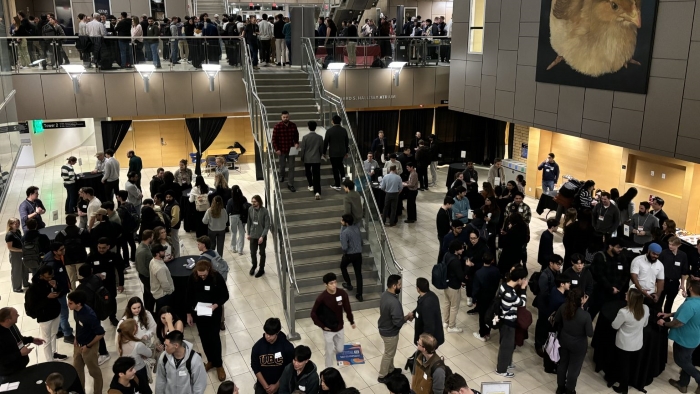
Students and employers at Industry Night

UBC Okanagan School of Engineering students are invited to attend Engineering Industry Night on Feb. 10.

This popular in-person networking event connects engineering students with industry employers from across the region and beyond. Specifically, students can explore career pathways, learn about upcoming co-op and new graduate opportunities, and build professional connections in a welcoming, low-pressure environment.

The event is a collaborative initiative between the School of Engineering’s Professional Development and Experiential Learning (PDEL) team and the UBC Applied Science Co-op Program.

Event details

UBC Okanagan Engineering Industry Night
Date: Tuesday, February 10, 2026
Time: 5–7 pm
Location: Level 0 & Level 1, EME Building
Cost: Free
Attire: Business casual is recommended
Refreshments: Beverages and light snacks will be provided

Registration is required and space is limited. Spots are available on a first-come, first-served basis until capacity is reached.

Register For Industry Night

View list of participating employers

For questions about the event, please contact grant.topor@ubc.ca.

UBCO Motorsport Gala

The following event advisory is shared on behalf of the UBC Okanagan Motorsports team. 

Get ready for a night of inspiration, innovation and connection at the Okanagan Innovation Gala — an exciting event hosted by the UBC Okanagan Motorsports team!

Mark your calendars for Saturday, January 31, 2026 at 5 PM, and join us at the Kelowna Events Centre for an unforgettable evening celebrating student creativity and regional technological leadership. This gala is more than just a dinner: it’s a chance to bring together bright minds from across academia and industry to share ideas, explore emerging challenges, and forge lasting connections.

What to Expect

  • The evening will feature:
    A three-course dinner — connect and dine with peers, mentors, and leaders in the innovation space.
  • A cross-disciplinary panel discussion — engage with industry professionals, faculty, and founders as they discuss real-world innovation challenges and insights.
  • Networking opportunities — meet engineers, entrepreneurs and changemakers driving the future across sectors.

Whether you’re a student, community supporter, or industry partner, this gala is a great chance to learn, connect, and celebrate the spirit of innovation in the Okanagan.

Tickets and early-bird pricing available now

Come be part of a dynamic night that showcases engineering excellence and empowers UBC Okanagan’s student innovators to reach new heights. See you there!

Register Online

Students in class at UBC Okanagan.

This spotlight was originally published by the Faculty of Creative and Critical Studies and is shared here as it features researchers from the School of Engineering:

A group of researchers at UBC Okanagan is reimagining classroom practices as culturally sustaining and moving beyond traditional notions of academic English writing towards a more inclusive, asset-based, and globally representative learning environment.

Plurality, Linguistic Justice, and Decolonization, focuses on creating a framework to help instructors support multilingual learners (domestic and international students who speak more than one language) in their classrooms by viewing linguistic diversity as an asset rather than a deficit. The project is facilitated by Drs Anita Chaudhuri (UBCO, FCCS), Jordan Stouck (UBCO, FCCS), Jing Li (UBCO, Engineering), and Steve Marshall (SFU, Education).

Chaudhuri, Stouck, Li, and Marshall all teach a variety of first-year English and communications courses, and recognize that multilingual learners write and perform differently, yet much of the conversation recognizing this remains at the policy level or within composition networks.

Chaudhuri explains that in Canada, research exists on plurilingualism, racio-linguistic practices, Indigenous worldviews, and social justice, but there is no established framework to guide classroom application. With this in mind, the team is working to develop the PRISM framework, integrating plurilingual, racio-linguistic, Indigenous, and social justice perspectives for multilingual learners (PRISM).

“At UBC, anti-racist agendas and EDI principles are present, but resources often overlook how students’ linguistic patterns shape their writing,” she adds. “Ultimately, the goal is to rethink standard academic English, making it more inclusive and dynamic, recognizing that language is tied to power and diversity enriches learning.”

Assessment practices in first-year writing courses often emphasize standardized structures like topic sentences and thesis statements. While these conventions remain useful, the PRISM framework encourages flexibility, so instead of one-size-fits-all assessments, instructors can consider multimodal approaches, such as allowing oral presentations for students who excel in speaking encouraging students to mix languages (e.g., code-meshing), show genre awareness, and use multiple forms of expression or technological modes when they compose texts.

“Feedback should move beyond the “red pen” to become an ongoing process, using verbal or interactive methods,” says Chaudhuri.

To get the project off the ground, the team hosted a public speaker series in May 2025 featuring fifteen scholars from across the country who work in writing studies, rhetoric, communication, and first-year academic writing. While they used different terms such as plurilingualism, linguistic justice, translanguaging, code-meshing, the shared idea was clear: multilingual students’ languages, cultures, and transnational experiences should be treated as assets, not deficits.

“We found that these concepts really challenge this traditional way of understanding what it means for multilingual students, to use their own language and dialects as part of their identity and part of their learning process,” says Li. “Building on these theoretical lenses, our project aims to create practical resources such as assignments, activities, and assessment tools for instructors to apply in their classrooms.”

Stouck notes that including student perspectives is essential. At the May speaker series, students acted as moderators and were asked to reflect on how the ideas resonated with their experience as university students.

“We want to get the viewpoints of students to understand if this approach it as how this approach is valuable or useful for their learning at university, not just in theory but in practice,” she says. “It was really interesting to see how this material that we are trying to translate from research into classroom practice resonates with students.”

The PRISM Framework website will become a centralized resource housing recordings, materials, and an evolving framework. This toolkit aims to make linguistic justice principles accessible to instructors through practical strategies, assignments, and culturally responsive activities. Graduate and undergraduate research assistants, along with a web developer, are creating content and animations to ensure accessibility. By connecting scholars’ ideas with classroom application, the project seeks to empower educators to value multilingualism and identity in learning while incorporating students’ full language resources.

Inspired by the May speaker series, staff in the UBC Okanagan Library including Jess Lowry, Academic Communication Consultant at the Centre for Scholarly Communication; Jo Scofield, Student Learning Hub Coordinator; and Rina Garcia Chua, Academic Integrity Program Manager, have compiled a list of supports and resources available for students, researchers, and faculty who want to embrace plurilingualism in their own work and communities.

This project is made possible with funding from a SSHRC Connections Grant, UBC Hampton Research Endowment Fund, UBC StEAR funds, and supported by UBC Okanagan School of Engineering, the Faculty of Creative and Critical Studies, and graduate and undergraduate students Naeem Nadaee (UBCO), Ru Yao (SFU), Harper Kerstens (UBCO), Marcus Hobkirk (UBCO), Eve Kasprzycka (UBCO) and Mark Lovesey (UBCO).