jputhe01

Email: janaki.putheth@ubc.ca


This year, Samantha Krieg, a graduate engineering student at UBC, was selected as a recipient of the prestigious Order of the White Rose Scholarship. Created to honor the memories of the 14 women who lost their lives in the 1989 École Polytechnique tragedy, the scholarship recognizes exceptional women pursuing graduate studies in engineering who demonstrate leadership, academic excellence, resilience, and a strong commitment to advancing equity in the field. Samantha joins three other UBC engineers recognized this year for their impactful work and dedication to creating a more inclusive engineering community. More about the award and this year’s recipients can be found here: White Rose Scholarship Recipients 

A photo of Samantha with a white rose

Samantha with a white rose

What does receiving the Order of the White Rose mean to you personally and academically?

Receiving the Order of the White Rose Award is life-changing. On a personal level, it holds deep significance for me as someone who has experienced sexism and misogyny while working in male-dominated environments. Even as progress is made, engineering remains a field where women continue to navigate subtle, shifting forms of discrimination. Workplace sexism has evolved, often appearing as loaded comments masked by plausible deniability or informal mentorship networks that disproportionately benefit certain people. These quiet barriers can make it difficult for underrepresented groups to advance. This award affirms not only my place in this field, but the importance of continuing to push for change. Academically, the scholarship will support me throughout my PhD and strengthen my research by connecting me with a community of individuals who are equally committed to making engineering more inclusive.

The SoE 'E' painted white in honor of 14 Not Forgotten.

The SoE ‘E’ painted white in honor of 14 Not Forgotten.

What will this award allow you to do, and how will it support your continued research and studies?

This award will help bridge the pay gap between research and industry, allowing me to fully devote my time and energy to my academic work. It gives me the confidence and financial stability to pursue opportunities that will elevate my research on earthquake-resilient and sustainable buildings. More than a monetary award, it has connected me with 13 other remarkable scholars who are all using their work to create meaningful change. The relationships formed this year, as well as those with past recipients and individuals involved in the Order of the White Rose community, will help propel my research forward and extend its impact beyond New Zealand.

What was it like to attend the ceremony at Polytechnique Montréal, and was there a moment that stood out for you?

Attending the award ceremony at Polytechnique Montréal was an unforgettable experience. The moment that resonated most deeply with me was hearing Nathalie Provost share her story as a survivor of the 1989 shooting. Her words were powerful and emotional and served as a stark reminder of the very real dangers that stem from misogyny. Throughout the ceremony, I found myself reflecting on how far we have come as a society while recognizing how much work remains. Violence against women in male-dominated fields continues to be a pressing issue. The recent death of Amber Czech, a 20-year-old welder killed by a coworker simply for “giving him a bad look,” weighs heavily on me. Moments like these underscore why advocacy, education, and cultural change are still urgently needed.

A memorial display honoring the 14 women killed in the 1989 tragedy

A memorial display honoring the 14 women killed in the 1989 tragedy

What are your goals for the future, and how do you see this award helping you move toward them?

During my PhD, I hope to collaborate closely with policymakers and industry leaders in both New Zealand and Canada to advance the tools and knowledge structural engineers need to design buildings that are more sustainable and better able to withstand earthquakes. After completing my degree, I plan to work in consulting as a structural engineer and join a company that prioritizes innovation and environmental responsibility. The mentorship and leadership workshops offered through the Order of the White Rose will help me build the skills I need to thrive in my research, and eventually in my professional career. This award has opened doors not only to new opportunities, but to a network that supports and amplifies my aspirations.

What advice would you offer to women in engineering and to young people inspired by your journey?

It is everyone’s responsibility to work toward ending misogyny and violence against women. If we are not actively breaking down the barriers that exist in engineering, we are allowing systems built on inequity to persist. My advice is to never shrink yourself to meet someone else’s expectations. This is true for all people, but especially for women in male-dominated fields. Support the people around you; community and collaboration will take you further than competition or tearing others down. When we uplift each other, we create environments where everyone can succeed.

Read more about UBCO’s White Rose Ceremony:  Reflecting on the past, standing together for a brighter future

Meet Engineers in Action Okanagan (EIA Okanagan), a student-led engineering design team that partners with underserved communities around the world to design and construct sustainable infrastructure solutions. Founded in 2024, the team empowers students to apply classroom concepts in real-world, cross-cultural settings while encouraging and developing leadership, communication, and project management skills. As part of the global EIA program, EIA Okanagan connects students with industry professionals for mentoring, as well as other university chapters to create community-driven infrastructure. 

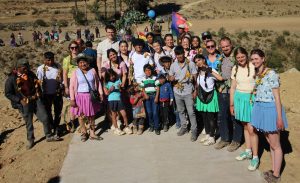
Two of the club members standing on top of the bridge they built

Members of the club standing on top of the bridge they built


Tell us about your team?

EIA Okanagan is a multidisciplinary club composed of engineering and management students focused on humanitarian infrastructure projects. The club operates under three core groups: Project Management, Bridge, and WASH (Water, Sanitation, and Hygiene), each collaborating closely with faculty advisors, alumni, and industry mentors.

The Bridge team designs pedestrian bridges for rural communities, transforming site layouts into fully engineered, buildable structures over the course of a year. The WASH team is a new addition that focuses on water and sanitation projects. Meanwhile, the Project Management team coordinates logistical work such as stakeholder communication, fundraising, budgeting, events, and day-to-day operations to keep the club running smoothly.

Together, these groups form a cohesive unit that not only designs and constructs life-changing infrastructure but also offers students hands-on professional experience in teamwork, leadership, and sustainable design.

How did your team get started or grow over time?

EIA Okanagan began in late 2023 when a small group of students recognized a gap on campus for a club that applied engineering skills to real-world humanitarian challenges. What started as an idea quickly evolved into a formal club by early 2024.

Initially, the team planned to operate as a tag-along chapter, supporting experienced universities in an observational capacity. However, student dedication soon exceeded expectations. Within their first year, members successfully designed and helped construct the Chunchuli Alto bridge in Bolivia while working alongside chapters from the University of Alberta and the University of Toronto.

That project marked the club’s first tangible success, serving as proof of concept. The completed bridge now connects more than 1,500 community members to schools, markets, and clinics. Building on that success, the team was invited to lead EIA’s first student-led bridge in Peru and collaborate on a new WASH initiative in Bolivia in partnership with CU Boulder and Washington State University.

From just four founding members to more than fifty today, the club has grown rapidly and continues building the foundation for future members to carry forward.

The engineers who built the bridge standing with some of the villagers

The students standing in front of the bridge with the residents.

What has been one of your team’s proudest accomplishments so far?

The club’s proudest moment was the “Entrega”, or inauguration ceremony, of the Chunchuli Alto bridge. Two UBCO students, Erik and Teryl traveled to Bolivia and lived within the local community for a month while helping construct the bridge.

They described the experience as life changing and a true test of engineering and adaptability. They worked ten-hour days, six days a week, performing manual labor in remote conditions with limited access to electricity and water. Despite the challenges, they formed strong bonds with community members and celebrated their success together at the bridge’s opening, where local elders inaugurated the structure with dancing and music.

This moment reinforced the purpose behind EIA Okanagan: Using engineering to create meaningful, tangible change.

“Using engineering to build meaningful tangible changes”

How has being part of the design team shaped your view and understanding of
engineering?

Being part of EIA Okanagan has shown members that engineering goes far beyond technical design. It includes collaboration, empathy, and global impact. Through hands-on experience, students have learned to apply classroom knowledge in unfamiliar, resource-limited environments and to think critically about how their work affects the daily lives of community members.

The projects mirror real engineering practice. Multiple stakeholders, international coordination, safety requirements, and strict standards. Students learn to communicate across cultures and disciplines, gaining a level of perspective and responsibility that classroom projects cannot always provide.

What was a challenge you had as a team, and how did you overcome it?

As a new chapter, one of the biggest challenges was building legitimacy, establishing a sustainable internal structure, securing funding, and earning trust within the university framework. Unlike competition-based teams, EIA Okanagan’s model did not fit existing club systems.

Early on, the team relied on small grants, crowdfunding, and support from various student organizations. Over time, they developed a stronger foundation by forming corporate partnerships, establishing faculty mentorships, and creating succession plans to ensure long-term success.

Mentorship from EIA’s Bridge Corps and alumni advisors played an important role. Students learned that success came from working with, not against, existing systems by building relationships and showing value through impact.

How do you think student design teams contribute to the UBCO engineering experience overall?

Clubs like EIA Okanagan transform the UBCO engineering experience by bridging the gap between academic learning and real-world application. They challenge students to lead, problem-solve, and communicate across cultures and disciplines.

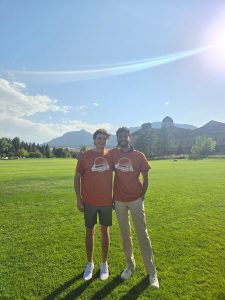
The members of the club wearing a "Bridge Builder" Shirt

Two members of the club standing in a field

Beyond technical design work, students develop leadership, budgeting, risk management, and stakeholder communication skills that are essential in professional engineering environments. Through partnerships with alumni and EIA’s international network, members also gain access to mentorship and professional development opportunities that prepare them for co-op and future careers.

These experiences create engineers who are not only technically capable but also socially aware, globally minded, and ready to make a difference.

What was one of your team’s best memories while working together?

One of the club’s most meaningful memories was standing on the completed Chunchuli Alto bridge alongside the Bolivian community during the inauguration ceremony. Months of design work, safety reviews, and construction planning culminated in a single, powerful moment of connection.

Erik and Teryl described living with host families, attending a community wedding, and building lifelong friendships with locals. These experiences reminded them why they joined EIA Okanagan. To see engineering transform lives firsthand.

How does being part of the team prepare members for co-op positions or jobs post
graduation?

EIA Okanagan equips students with both technical expertise and professional competencies that translate directly to co-op placements and future careers. Members gain experience in structural design, load analysis, construction management, and safety planning. They also strengthen teamwork, leadership, budgeting, and cross-cultural communication skills.

Because every project involves coordination between multiple universities and industry mentors, students learn to manage complex stakeholder relationships similar to those found in real-world engineering projects. The projects are as global as they get and as down to earth as they come.

As a result, EIA Okanagan alumni enter the workforce with a strong foundation in both engineering practice and human-centered design.

“Our projects are as global as they get  and as down to earth as they come.”

As a member of the team, what opportunities are available to connect with industry
professionals, alumni or companies?

Members engage with professionals through EIA’s Bridge Corps network, which connects students to practicing engineers and project managers across North America. Within UBCO, the club regularly hosts professional development events featuring alumni and industry partners who share insights on career paths, project management, and field engineering.

An upcoming alumni panel will feature graduates working in industry and government. Two in civil engineering, one in mechanical engineering, and one in management. These conversations provide mentorship and guidance to current members.

Corporate sponsors can also connect directly with the club by participating in speaker sessions, offering technical mentorship, or collaborating on outreach initiatives, strengthening ties between education and industry.

What are the technical and transferrable skill members typically develop by being part of
the team?

Members develop a balanced mix of technical and transferable skills that extend beyond the classroom. Technical skills include bridge design, load calculations, material selection, concrete mixing, and safety analysis.

Equally important are transferable skills such as project management, financial planning, communication, adaptability, leadership, and intercultural teamwork. Students also learn to work in resource-limited environments, an invaluable skill for any engineer entering the global workforce.

What advice would your team give to students thinking about joining or starting a design
team?

Start small, stay passionate, and focus on the impact you want to make. Building a club from the ground up takes time, patience, and collaboration, but every initiative begins with a few dedicated students and a clear purpose.

Seek mentorship early, establish a solid structure, and remember that growth comes from learning by doing. Most importantly, build a culture that values both technical excellence and human connection. The strongest engineering clubs do more than build structures. They build communities.

“Building a team from the ground up takes time, patience, and collaboration, but every great initiative starts with a few dedicated students and a clear purpose.”

Anything else you’d like to share?

EIA Okanagan is always looking for motivated students who want to combine their technical knowledge with real-world impact. Whether your interest lies in design, construction, management, or outreach, there is a place for you in EIA Okanagan and an opportunity to make a tangible difference in the lives of others.

The club is also seeking partners and sponsors who share their commitment to sustainable development and student growth. Join them in creating long-term positive change while connecting with a dynamic group of future engineers and leaders.

In addition, the team is continuing to raise funds through their ongoing student-led crowdfunding campaign, which directly supports travel, construction materials, and community-driven infrastructure projects. You can contribute here: Support the campaign

Curious about Engineers in Action Okanagan? Visit their LinkedIn: Learn more!

Meet UBCO Aerospace is a student-led engineering design team that brings together passionate students to design, build, and test innovative aerospace systems. The team works on a diverse range of projects, including drones, rockets, fixed-wing aircraft, and drone racing initiatives, while also participating in national and international competitions such as the AEAC National Student Drone Competition and LAUNCH Canada. Beyond technical design, UBCO Aerospace promotes collaboration, technical skill development, and outreach through workshops, community events, and STEM engagement activities. The team provides students from all faculties with the opportunity to gain hands-on experience, strengthen problem-solving skills, and contribute to  advancing aerospace innovation at UBC Okanagan.

UBCO Aerospace Team with their Aircraft

UBCO Aerospace Team with their Aircraft


How did your team get started or grow over time?

We’re a student-led engineering design team at UBC Okanagan with one big focus: aerospace. What started as a small group of students passionate about flight has grown into a team that designs, builds, and tests everything from drones and rockets to fixed-wing aircraft and racing drones.

Our projects don’t stop at campus, either. We put our designs to the test on national and international stages, competing in challenges like the AEAC National Student Drone Competition and LAUNCH Canada.

We’re also pushing into new territory with our pilot project, the Space Design Team. Guided by UBCO Aerospace, this group is preparing a technical proposal for the 2026 AIAA Undergraduate Team Space Design Competition, blending research with hands-on problem-solving.

But what really makes our team different is the culture. We’re not just building aircraft’s; we engage in workshops, community events, and STEM initiatives. From hosting workshops and STEM events to representing UBCO in competitions, we’re committed to growing as engineers and as a community. UBCO Aerospace provides students from all faculties the chance to gain hands-on experience, strengthen problem-solving skills, and contribute to advancing aerospace innovation.

We’re committed to growing as engineers and as a community

What kinds of projects or competitions has your team been involved in?

UBCO Aerospace has been involved in a wide range of projects and competitions across drones, rocketry, fixed-wing aircraft, and space design. On the UAV side, the team has competed in the AEAC National Student Drone Competition, with upcoming tasks focused on fire reconnaissance and extinguishing for 2026, while also running internal drone racing events, UAV certification training, and technical workshops such as PCB design, GitHub, and Flight Simulation.

In rocketry, the team participates annually in Launch Canada and is preparing for the international FAR-OUT competition with projects like the Dragon Lady rocket, DIY and certification rockets, an autonomous steerable parachute system, a new all-in-one ground station, and the “Hell’s Kitchen” motor test stand designed for liquid, hybrid, and solid engines. The Fixed-Wing division has built a 3D-printed plane (63 Seconds) and is working on new projects such as Dragon Lady Glider, a Flying Wing, and a competition-ready base aircraft, with members learning skills in CAD, aerodynamic simulation, and stability analysis.

In addition, the Space Design Team, a pilot program under UBCO Aerospace, is preparing for the 2026 AIAA Undergraduate Team Space Design Competition by developing a heliophysics mission concept to enable Earth–Mars communication. Together, these initiatives highlight the team’s commitment to hands-on aerospace innovation, technical skill-building, and national and international competition.


UBCO Aerospace's drone wiring and electronic's system

UBCO Aerospace’s drone wiring and electronic’s system


What has been one of your team’s proudest accomplishments so far?

One of UBCO Aerospace’s proudest accomplishments was at the 2023 AEAC Student Drone Competition, where the team won two awards: placing 2nd overall out of more than 14 top Canadian university teams and earning the Innovation Award for developing our custom helicopter platform, ORCA. More recently, the rocketry division achieved a historic milestone with the successful launch of HYDRA Mini, the first clustered hybrid rocket launched from Canadian soil. This launch made UBCO Aerospace the first non-commercial team, and possibly the first team worldwide, to fly a clustered hybrid rocket using different impulse engines. These accomplishments showcase both our technical innovation and our ability to compete on a national and international level.

“We placed 2nd overall out of more than 14 top Canadian University teams and earned the Innovation Award. This showcase’s our ability to compete on a national and international level.”

UBCO Aerospace's Hydra Mini

UBCO Aerospace’s Hydra Mini

How has being part of the design team shaped your view and understanding of
engineering?

Being part of UBCO Aerospace gives students the chance to take engineering concepts beyond the classroom and see theory come alive in real-world projects like drones, rockets, and fixed-wing aircraft. These hands-on experiences deepen our understanding of design, testing, and problem-solving under real constraints, while also emphasizing collaboration, leadership, and adaptability.

The learning goes far beyond technical skills. Team members develop project management, budgeting, sponsorship outreach, and event organization experience, while also strengthening communication, teamwork, and public speaking through outreach and industry engagement. Together, these opportunities build resilience, sharpen time management, and expand professional networks shaping a well-rounded foundation for success in both technical and non-technical careers.

What was a challenge you had as a team and how did you overcome it?

One of our biggest challenges has been navigating the steep learning curve that comes with aerospace design. From financial constraints to coordinating complex projects, UBCO Aerospace has faced its share of setbacks, including the occasional lost or crashed aircraft. In more than one case, the team had to rebuild an aircraft overnight just to make it to competition or testing on time.

High-powered rocketry has added another layer of complexity. Projects like the HYDRA Mini clustered hybrid rocket demanded rigorous planning, extensive simulations, and strict compliance with CAR/Tripoli safety standards.

What got us through wasn’t just technical skill, but communication, collaboration, and grit. By working across sub-teams, testing iteratively, and approaching problems creatively, we turned obstacles into lessons. These experiences have shaped us into a team that’s resilient, adaptable, and capable of tackling ambitious technical goals together.

The UBCO Aerospace team standing with their aircraft

The UBCO Aerospace team standing with their aircraft

How do you think student design teams contribute to the UBCO engineering experience overall?

Student design teams like UBCO Aerospace don’t just give students technical practice, they shape the culture of engineering at UBCO. They create spaces where students from different disciplines come together to innovate, compete, and represent the university on national and international stages. These teams become a bridge between campus and industry, building connections, inspiring younger students through outreach, and showcasing what UBCO engineers are capable of. More than projects, they foster pride, community, and a spirit of innovation that strengthens the entire engineering experience at UBCO.

“Student design teams like UBCO Aerospace don’t just give students technical practice, they shape the culture of engineering at UBCO. They create spaces where students from different disciplines come together to innovate and compete”

What was one of your team’s best memories’ while working together?

One of UBCO Aerospace’s best memories was during the successful launch of the HYDRA Miniclustered hybrid rocket. The moment when the rocket lifted off flawlessly, after months of design, testing, and coordination across sub-teams, brought the entire team together in celebration. Other unforgettable moments include overnight rebuilds of crashed aircraft to ensure competition participation, the excitement of winning awards at the 2023 AEAC Student Drone Competition, and engaging with the community during STEM outreach events.


How does being part of the team prepare members for co-op positions or jobs post
graduation?

Being part of UBCO Aerospace is more than a student activity, it’s preparation for co-op placements and future careers. Members gain critical aerospace industry skills through projects in drones, rockets, fixed-wing aircraft, and space systems, while also developing professional strengths in project management, teamwork, leadership, and communication. Close collaboration with industry sponsors and experts, along with exposure to competitions, workshops, and community outreach, further builds adaptability, time management, and networking. For those on competitive teams, balancing demanding projects with academics mirrors a full-time workplace, giving members a valuable head start as they transition into industry careers.

“Being part of UBCO Aerospace is more than a student activity, it’s preparation for co-op placements and future careers”

As a member of the team, what opportunities are available to connect with industry
professionals, alumni or companies?

As a member of UBCO Aerospace, students have multiple opportunities to connect with industry professionals, alumni, and companies. These include participating in national and international competitions such as the AEAC Student Drone Competition and Launch Canada. The team collaborates directly with industry sponsors and experts for mentorship, technical guidance, and project support. For example, past sponsorship with KF Aerospace provided not only financial support but also unique experiences, including tours of their facilities, participation in the KF Aerospace Open House, and the opportunity to observe live aircraft maintenance within their hangars. Members also gain exposure to alumni in aerospace and related fields, helping build professional networks, gain industry insights, and enhance career prospects.

A UBCO Aerospace member wearing the club's offical shirt

A UBCO Aerospace member wearing the club’s official shirt

What are the technical and transferrable skill members typically develop by being part of
the team?

Members of UBCO Aerospace develop a wide range of technical and transferable skills.
Technically, students gain experience in design, simulation, testing, and problem-solving across drones, rockets, fixed-wing aircraft, and space systems. They also learn software tools such as SolidWorks, XFLR5, KiCAD, and flight simulation platforms, and develop skills in aerodynamics, systems integration, and control. Transferable skills include project management, teamwork, leadership, communication, public speaking, time management, and collaboration with industry sponsors and experts.

What advice would your team give to students thinking about joining or starting a design
team?

Our advice to students considering joining or starting a design team is to step out of your comfort zone and get involved. Design teams simulate real-world industry projects, giving you the chance to collaborate with peers who have diverse skills and backgrounds. You’ll learn from each other, tackle challenges together, and grow both technically and professionally. Being part of a design team offers hands-on experience, exposure to competitions, and opportunities to connect with industry, all while building teamwork, problem-solving, and leadership skills that are invaluable in your future career.

Anything else you’d like to share?

Even though UBCO Aerospace is labeled as a design team, it is not limited to engineering
students. The team welcomes members from diverse disciplines, including computer science for software, business for sponsorship and outreach, and arts for media and marketing — every background can contribute meaningfully.

Curious about the UBCO Aerospace? Visit their website to learn more: https://aerospacerocketry.wixsite.com/home


Meet Ravy Lock: A passionate fourth-year Civil Engineering student at UBC Okanagan, Ravy has embraced every opportunity to learn, grow, and make a meaningful impact. From student projects and competitions to research and leadership roles, he’s been actively involved in shaping his academic and professional journey. What drives him isn’t just the desire to stand out, but a genuine love for collaboration and creating solutions that matter. While he’s still exploring his path, he approaches it with curiosity, purpose, and deep appreciation for the experiences and support that have helped him get here.

A headshot of Ravy standing outside

A headshot of Ravy standing outside.

Tell us a bit about yourself.

I grew up in the city of Hong Kong and then spent most of my high school years in Vancouver, so I’ve always lived in cities where there’s a lot going on. I think just being around that – tall buildings, roads, and CONSTANT construction – made me curious about how everything worked. I didn’t have some big “aha” moment, but civil engineering felt like an industry I could build a home in (pun intended). I like the idea of building things that actually help people, even if it’s in small ways. In the recent years, I’ve started to think more seriously about the kind of impact I want to have, and that led me to focus more on sustainability. That’s shaped a lot of what I’m working on now, from doing research on eco-friendly soil stabilization methods to leading a student design team that looks at structural efficiency and optimizing project life cycles. Whether it’s through competitions, research, or even just learning, I’ve been trying to stay mindful of how engineering choices affect the bigger picture.

What drew you to UBC Okanagan and the School of Engineering?

To be honest, it wasn’t some big plan from the start. I knew I wanted to study engineering, and UBCO offered a more welcoming environment where I could actually get to know people, not just be a face in a crowd. The smaller class sizes and hands-on learning really stood out to me. It felt like a place where I could try things, make mistakes, and grow at my own pace. Over time, I’ve come to appreciate how much freedom students have to shape their own experience here.

Over time, I’ve come to appreciate how much freedom students have to shape their own experience here.

What has been the best part about being a UBCO Engineering student so far? If you could design a course or program to add to your degree, what would it be?

The best part for me has honestly been the people. UBCO is a smaller campus, so it’s easier to get to know your classmates, professors, and even folks in different disciplines. That sense of community made it easier to take risks because you know there’s support around you.

If I could design a course, I’d probably want something that blends hands-on construction with sustainability. Something like a “design-build” studio where students actually build small-scale projects using recycled or low-impact materials. It would give people a better feel for how designs actually come to life, and what trade-offs you have to make when working with real-world constraints.

On the flip side, what has been the most challenging aspect of university experience so far?  How has your perspective on perseverance evolved because of it, and what lessons did you learn from it?

I think the most challenging part has been learning how to navigate ambiguity, not just academically, but in life. University doesn’t come with a step-by-step guide, and sometimes it feels like you’re making big decisions with limited information, whether it’s picking a project, choosing between work opportunities, or figuring out what “success” even means to you.

Perseverance used to mean grinding things out no matter what, but now I see it more as staying grounded when things feel uncertain. It’s about being okay with not knowing everything right away, and still moving forward with intention. I’ve learned that discomfort is part of growth, and that clarity often comes after, not before, you take the leap.

I’ve learned that discomfort is part of growth, and that clarity often comes after, not before, you take the leap.

Why did you choose to study engineering? How do you envision engineering shaping your life personally and professionally in the future?

I’ve known since I was a kid that I wanted to build things. I didn’t know the word for it at the time, but I was always drawn to how things worked – how buildings stood up, how roads connected, how everything fit together. That curiosity eventually led me to civil engineering. It felt like a natural path where I could apply that interest in a way that actually helps people and communities.

I see engineering as more than just a job — it’s a mindset that teaches you how to think critically, adapt, and design with intention. Whether I stay on a technical path or move toward starting something of my own, I know I want to keep working on meaningful problems and creating things that leave a positive mark.

What project or experience at UBCO has made you feel particularly proud or like a “real” engineer so far?

Leading the UBCO Steel Bridge Team has probably been the moment when it all felt real. Starting the team from scratch, figuring out design challenges, coordinating fabrication, dealing with last-minute issues… It was messy, stressful, and honestly one of the most rewarding things I’ve ever done.

There was something about seeing a physical structure come to life, piece by piece, that hit different. It wasn’t just theory or grades anymore, it was solving problems under pressure, working with a team, and building something you could literally stand on. That’s when it really clicked for me: this is what engineering feels like.

How has Engineering changed your view on the world? What misconceptions do you think the public holds about engineering, and what would you do to change those perceptions?

Engineering has made me see the world through a more systems-based lens. I’ve come to realize that almost everything around us is the result of countless decisions, trade-offs, and problem-solving behind the scenes. It’s helped me appreciate the complexity of everyday things and the responsibility that comes with shaping them.

I think a common misconception is that engineering is purely technical, just math, formulas, and cold calculations. But in reality, it’s deeply human. Engineering is about people, context, and impact. If we want to change that perception, we need to tell better stories. We need to show how engineering touches lives, supports communities, and solves real problems, especially in ways that aren’t always flashy or visible.

Engineering is about people, context, and impact.


Ravy competing at Western Engineering Competition 2025 in the University of Saskatchewan

Ravy competing at WEC 2025 in the University of Sasketchewan.

What is one thing most people don’t know about you?

Most people don’t know that I can be pretty self-critical. On the outside, I might seem confident or driven, but I spend a lot of time second-guessing myself and quietly figuring things out behind the scenes. I think it’s part of why I work hard, not to prove anything to others, but to meet my own standards.

Who or what inspires you? Have you had a mentor before, and if so, what did they help you learn about yourself?

I come from a lineage of remarkable individuals. My parents and those before them have achieved a great deal, but more than their accomplishments, it’s their kindness and character that continue to inspire me the most. They’ve set an example of working hard, staying grounded, and doing things with integrity, not for external recognition, but because it’s the right thing to do. That mindset has stuck with me.

I’ve also been fortunate to have mentors throughout university who challenged me in a good way. They helped me recognize strengths I didn’t always see in myself, and taught me that growth often comes from being uncomfortable and learning to lead by example.

 In 5 words or less, how would you sum up the UBCO / School of Engineering experience?

Learn, fail, adapt, grow, repeat.

What is one thing you know now that you wish you would have known in High School, in First Year, or in an earlier moment in your life? If you could give your future self one piece of advice, what would it be?

I wish I had known that no one really has it all figured out, and that’s okay. In high school and early university, I thought success meant having a clear plan and following it without mistakes. But I’ve learned that growth often comes from detours, trial and error, and sometimes just showing up when things feel uncertain.

If I could give my future self one piece of advice, it would be: don’t rush the process. Stay present, stay curious, and trust that things will fall into place if you keep moving with intention.

With six courses per semester, balancing the technical demands of your degree can be tough. How do you manage to maintain a healthy work-life balance and meet the demands of your personal life?

Honestly, it’s not always balanced, and I think that’s okay to admit. Some weeks are chaotic and things pile up, but I’ve learned to be more intentional with my time and energy. What helps me is setting boundaries where I can, leaning on people I trust, and finding small ways to recharge. Even if it’s just going for a walk, hitting the gym, or spending time with people who ground me.

I’ve also learned that being “productive” isn’t just about doing more. It’s about doing the right things and knowing when to step back. It’s still a work in progress, but I try not to tie my self-worth to how busy I am.

What advice do you have for future / current engineering students?

Don’t be afraid to figure things out as you go. You don’t need to have all the answers, you just need to stay curious, ask questions, and be willing to put yourself out there. Take the opportunities that scare you a little, whether it’s joining a team, trying research, or starting something new. That’s where the growth happens.

Also, don’t forget that engineering is a team sport. The people around you will make a huge difference, so find your circle, support each other, and don’t be afraid to lean on them when things get tough.

Don’t forget that engineering is a team sport. The people around you will make a huge difference, so find your circle, support each other, and don’t be afraid to lean on them when things get tough.

Anything else you’d like to share about your UBCO Engineering student journey?

For my last year of studies, aside from focusing on the initiatives that I am already in and giving back to my community, I will be dedicating myself to a meaningful Capstone Project. I am looking forward to working on a project that is a sustainable solution to real-world problems. I can’t give away too much on what my idea is just yet, but let’s just say, it’s something I really believe in. Stay tuned!


A headshot of Katherine standing outside

A headshot of Katherine outside.

Katherine Latosinsky is an MASc student in electrical engineering whose experimental research is focused on developing new technology for solar energy generation. Katherine came to UBC Okanagan after completing her bachelor’s in engineering science at the University of Toronto, where she majored in engineering physics. She is passionate about science communication and community outreach and was also a finalist in the 3-minute thesis competition at UBCO this year.

Tell us a bit about yourself.

I have roots in a few different places – I was born in Winnipeg and then lived in London, Ontario, before moving to Toronto for my bachelor’s. Now I’m here in the Okanagan for graduate studies. I love to both learn and do hands-on activities, and I care a lot about the impact my work has in the world, which is what brought me to pursue research in renewable energy. Outside of school, I enjoy being outdoors and commuting by bike. I also live on a sheep farm while staying with family in the Okanagan, so between the farm and school there’s always a lot going on!

Tell us about your academic journey leading up to your MASc studies.

My journey in science and engineering was never a straight path—actually, I nearly majored in history! In my undergrad I explored several different fields through summer research, and I also did a 12-month internship at an engineering firm specialized in acoustics and vibrations. For my bachelor’s thesis I developed instrumentation on superconducting materials, which got me interested in material physics and electronics. After undergrad I knew I was looking to do something intellectually stimulating and hands-on and also related to addressing climate change, which I feel is the most significant challenge facing the world today. This led me to experimental research in solar energy

What inspired you to pursue a Master of Applied Science degree, and why did you choose UBC Okanagan for your graduate studies?

I chose to pursue an MASc to build my credentials and contribute to research in renewable energy. I came to UBCO because I felt I would grow more at a new university, and, within Canada, Dr. Uhl’s research fit best with my interests and my background in physics and engineering. The mountains and smaller campus were also a draw for me!

Katherine working in her research lab

Katherine working in her research lab

Tell us about your research.

My research is focused on developing a new type of solar cell, which is the part of a solar panel that converts light to electricity. Most solar panels are made from crystalline silicon, but my research involves two different materials that can be deposited as thin films in a process similar to inkjet printing, which can greatly reduce manufacturing costs. These materials—called perovskites and CIGS—absorb different visible and invisible colors of light, so they can be stacked on top of each other to make a “tandem” solar cell that absorbs more light and produces more electricity than a conventional single-layer structure. Our research group already makes solar cells using each of these materials separately; my role is to combine them in a tandem solar cell, ensuring all the layers are chemically, electrically, and optically compatible. In the future, this technology could be used to make efficient, low-cost, lightweight, and flexible solar panels, unlocking new applications for solar energy generation.

How did you find your community at UBCO? (clubs, within your research group, etc.)

This year I contributed to the Women in Science and Engineering and Solar Energy Ambassador programs at UBCO, which are outreach programs for undergraduate and high school students, respectively. Volunteering with campus-based groups has helped me connect with students with similar interests. This degree is my first time being a “commuter” student at university, but I’ve had a lot of success finding off-campus community programs closer to where I live, including recreational volleyball and an upcoming across-the-lake swim event.


Katherine at the 3MT engineering heat in February

Katherine at the 3MT engineering heat in February

What has been the most rewarding part of your UBCO experience?

I really appreciate the opportunity I have as a graduate student to support other students’ learning. In my first experience as a TA this year, I found it very rewarding to provide tutorials to undergraduates on a subject I love (electromagnetism). Explaining the content also deepened my own understanding of the material.

What challenges have you faced during your time at UBC, and have you grown or adapted as a result?

Coming from a large campus to a smaller one was a bit of an adjustment. I’ve found it useful, though, to use term papers as an opportunity to explore connections between the course content and my own research. My supervisor also helped me set up a directed studies course (ENGR 598) with a curriculum that will let me dive deeper into the physics and theory behind my research, so I’m excited to start that in the fall.

What advice would you give to prospective or incoming UBCO students?

I highly recommend reaching out to both professors and students to learn more about specific programs, courses, and research groups you are interested in. Don’t be scared to approach a prof or TA after class, find someone’s office, or send an email out of the blue.

“You don’t lose anything by asking for advice, and most people are happy to share their experiences.”

How has your experience in the MASc program prepared you for your career or future academic goals?

Beyond acquiring niche technical knowledge relevant to my research, this degree has helped me improve my skills in project planning, troubleshooting, and technical communication, while gaining a deeper understanding of the challenges and opportunities associated with renewable energy technologies. After graduating I plan to work in the renewables industry for a few years before deciding if a PhD is the right fit for me, and I’m looking forward to that adventure.

Have you had opportunities to present your research (e.g., conferences, publications, workshops)? If so, what have you learned from those experiences?

I had a great experience participating in UBC Okanagan’s three-minute thesis competition this year. It was challenging to explain my research briefly to a general audience, especially when I was a few months into my degree, but it really helped me distill the motivation and challenges associated with my research area. I also had the opportunity to present a research poster at the Solar Energy BC conference hosted by UBCO in April, which was a great opportunity to hear both academic and industry perspectives on the future of solar energy in this province

Katherine speaking on stage at a Solar Energy Ambassador Outreach Activity

Katherine speaking on stage at a Solar Energy Ambassador Outreach Activity

If you could give your past self one piece of advice before starting your MASc journey, what would it be?

As cliché as it is, I would say have the courage to be yourself, especially coming to a new place. Whether engaging in class, in your research group, or just in everyday interactions, it’s better to put yourself out there and risk making mistakes rather than to be small and never leave an impression.

” It’s better to put yourself out there and risk making mistakes rather than to be small and never leave an impression.”

As a woman in engineering, how has your perspective shaped your experience or purpose in the field, and what shifts are you seeing today?

Twice in my life I have studied a technical subject with a mostly-female cohort, and in both instances I was deeply inspired by the courage and skill of my peers. The summer before I started undergrad, I had the privilege of obtaining my Private Pilot’s License (PPL) through the Canadian Air Cadet program. Although only about 10-15% of PPLs are issued to women each year, I completed flight training with an all-female group of cadets. Later, in my graduating year at U of T, most of the roughly twelve students in the engineering physics major were women, in stark contrast to the larger group studying pure physics. In both those experiences, studying challenging, technical subjects alongside other women was extremely motivating, and I certainly learned from my friends on how to be comfortable with my own identity while pursuing a career in STEM.

What advice would you share with the next generation of women and underrepresented voices entering engineering?

There are still real challenges facing women and other minorities in engineering, but it’s always easier when you find friends, mentors, and community. You have as much right to be an engineer as the next person, and if you can focus on the beauty of what you learn and joy in what you do, it will take you far.

“You have as much right to be an engineer as the next person, and if you can focus on the beauty of what you learn and joy in what you do, it will take you far.”

Learn more about Katherine’s research group Here: Laboratory For Solar Energy and Fuels


Meet UBCO Steel Bridge: They are a student-led engineering design team from the University of British Columbia Okanagan. Founded in 2023, the team made history as the first annex-campus team in Canada to compete independently at the Canadian National Steel Bridge Competition. The team focuses on structural efficiency, sustainability, and hands-on fabrication, giving students the opportunity to apply classroom concepts to real-world challenges. Driven by collaboration and innovation, the team continues to grow as a cornerstone of UBCO’s engineering community.


Photo of UBCO Steel Bridge team at CNSBC 2025

Photo of UBCO Steel Bridge team at Canadian National Steel Bridge Competition 2025


Tell us about your team.

We’re a group of civil engineering students who came together with a shared goal: to build something real. The UBCO Steel Bridge Team was founded to give students at our campus the chance to apply what we learn in class to hands-on design and fabrication. Most of us had never welded or designed a bridge before joining, so we learned everything from the ground up, together.

Our work spans the entire lifecycle of the bridge: structural analysis, 3D modeling, design optimization, budgeting, fundraising, fabrication, and competition logistics. Every piece of the bridge—from the first sketch to the final bolt—is student-led and team-built.

What makes our team special is the culture. We’re collaborative, resourceful, and not afraid to figure things out as we go. From late nights in the shop to early morning design reviews, everyone shows up not just to work but to support each other. Whether you’re on the design, build, logistics, or outreach side, you’re part of a team that values effort, growth, and passion.

Whether you’re on the design, build, logistics, or outreach side, you’re part of a team that values effort, growth, and passion.

How did your team get started or grow over time?

The UBCO Steel Bridge Team started with just a handful of students who saw a gap — there were plenty of design competitions out there, but nothing at our campus that focused on structural engineering in a hands-on way. So we decided to build it from the ground up. No existing framework, no blueprint — just motivation, Google Docs, and a lot of trial and error.

Our first year was about proving that we could do it. We designed, fabricated, and competed as an independent team at the Canadian National Steel Bridge Competition — the first time a satellite campus from Canada had ever done so. From there, word spread and interest grew. What started as a small group turned into a fully structured team with subgroups for design, build, logistics, and outreach.

We’re still growing, but every step has been about laying a foundation — not just for competition success, but for building a sustainable, student-led team that future engineers at UBCO can carry forward.

What kinds of projects or competitions has your team been involved in?

Our team’s primary focus is the Canadian National Steel Bridge Competition, a national-level event where university teams are challenged to design, fabricate, and construct a scale-model steel bridge. The competition emphasizes structural efficiency, construction speed, cost-effectiveness, and compliance with strict design constraints. It’s a comprehensive test of engineering knowledge, teamwork, and hands-on problem-solving.

In addition to the competition, we’re actively involved in outreach initiatives, industry engagement, and skill development workshops. We also dedicate time to internal projects that improve our processes – from refining our fabrication techniques to experimenting with more efficient connection designs. These efforts help us grow not just as competitors, but as a learning-focused and sustainable team.

UBCO Steel Bridge at CSBC

UBCO Steel Bridge at CSBC

“These efforts help us grow not just as competitors, but as a learning-focused and sustainable team.”

What has been one of your team’s proudest accomplishments so far?

There are a few milestones we’re especially proud of. First, growing the team from just a few students into a structured and motivated group has been a huge achievement on its own. Starting from almost nothing, we built a foundation for something sustainable. Seeing more students step up, take ownership, and bring new energy into the team has been incredibly rewarding.

We’re also proud of the strong relationships we’ve built with industry partners. Securing meaningful sponsorships and support from professionals in the field not only validated the work we’re doing, but helped us bridge the gap between student learning and real-world engineering.

And finally, being recognized with the Most Improved Team award at the 2025 Canadian National Steel Bridge Competition was a proud moment. It was a reflection of all the hard work, long nights, and collective effort that went into turning an ambitious idea into something real.

“It was a reflection of all the hard work, long nights, and collective effort that went into turning an ambitious idea into something real.”

What was a challenge you had as a team and how did you overcome it?

One of our biggest challenges was navigating the steep learning curve that came with starting from scratch. None of us had prior experience designing or fabricating a steel bridge, and we didn’t have an established playbook to follow. Everything, from structural design and welding to budgeting and logistics, had to be figured out through trial, error, and a lot of persistence.

What got us through was our willingness to ask for help, stay adaptable, and support one another. We reached out to professors, industry mentors, and even other teams to learn from their experiences. More importantly, we built a culture where it was okay to not have all the answers, as long as we were willing to learn. That mindset helped us move forward, one challenge at a time, and turn obstacles into stepping stones.

UBCO Steel Bridge Team showcasing their list of sponsors

UBCO Steel Bridge Team showcasing their list of sponsors

How do you think student design teams contribute to the UBCO engineering experience overall?

Student design teams add a whole new layer to the engineering experience at UBCO. They take what we learn in class and push us to apply it in real, hands-on situations. From technical design to working under pressure, it’s one thing to study theory, and another to actually build something from the ground up.

At a smaller campus like UBCO, these teams also create tight-knit communities. You’re not just learning — you’re leading, collaborating, and figuring things out together. It gives students a sense of ownership and purpose that really strengthens both their skills and their confidence.

What was one of your team’s best memories’ while working together?

One of our favorite memories was the night before our presentation at the 2025 competition. Our entire team was crammed into one small hotel room, laptops out, sitting on the floor, beds, and anywhere we could find space. We were putting the final touches on our presentation, rehearsing lines, adjusting slides, and giving each other feedback.

It was chaotic in the best way. Everyone was tired, but completely dialed in. That moment really captured what our team is about, showing up for each other, figuring things out together, and having fun even under pressure. It felt less like a task and more like a group of friends doing something we all cared about.

What advice would your team give to students thinking about joining or starting a design team?

Don’t wait until you feel “ready”, just start. Whether you’re joining an existing team or thinking about starting your own, the most important thing is to take that first step. You don’t need to have all the technical knowledge figured out, you’ll learn as you go. What matters more is showing up, being willing to try, and working together with others who care.

“Don’t wait until you feel “ready”, just start.”

For those starting something new, know that it won’t be perfect at the beginning — and that’s okay. Focus on building a strong culture, finding good people, and staying consistent. The rest will come with time. Looking back, some of our best progress happened when we were figuring things out in real time, and doing it together.

Anything else you’d like to share?

Next year is going to be big for us. We’re aiming higher, from improving our structural performance and build speed, to refining our fabrication methods and making our design more innovative and sustainable. After everything we learned from our first year, we’re coming back more focused, more prepared, and more ambitious than ever.

But beyond the competition, we’re also working on growing the team, strengthening our industry connections, and creating more opportunities for students at UBCO to get involved in hands-on engineering. Whether that’s through workshops, mentoring, or community outreach, we want to make the design team experience accessible to more people.

So keep your eyes on us! We’ve got some exciting things in the works, and we’re just getting started. If you’re someone who’s curious, motivated, or just wants to build cool stuff with a great team, come find us. There’s a place for you here.

Curious about the UBCO Steel Bridge Team? Visit their website to learn more: https://www.ubcosteelbridge.ca


Mojdeh standing outside smiling.

Mojdeh Rezaei-Khamseh, Master of Applied Science Student at UBCO.

Meet Mojdeh Rezaei-Khamseh: a Master of Applied Science (MASc) international student in Mechanical Engineering at UBC Okanagan and recipient of the 2025 Dr. Spiro Yannacopoulos International Engineering Student Memorial Award. Mojdeh’s research explores the use of electrospun plant-based materials enhanced with conductive and magnetic fillers to design multilayer structures with high absorption capabilities. With a background in both polymer science and hands-on experimental techniques, Mojdeh brings an interdisciplinary approach to solving environmental and technological challenges. She is passionate about advancing green materials for energy efficiency.

It was Mojdeh’s passion and potentional to contribute greatly to her chosen research field, strong academic performance, and engagement with the UBC community that made her the worthy recipient of the 2025 Spiro Award. In recognition of International Women in Engineering Day, she is one of several women in engineering being spotlighted from the School of Engineering.

Tell us a bit about yourself.

I’m an international graduate student with academic and professional experience across three countries. I completed my first Master’s degree in France, where I specialized in polymer composites and gained industrial experience working on their mechanical characterization. Now, at UBC Okanagan, I am continuing my journey in materials research with a focus on green technologies and sustainable composites. Outside the lab, I’m also passionate about fashion and jewelry making, which nurtured my precision and creativity, skills that carry over into my research.

Tell us about your academic journey leading up to your MASc studies.

My academic path began with a Bachelor’s in Materials Engineering in Iran. I then pursued a Master’s degree in France, where I gained hands-on research and industry experience in polymer-based composites, especially their mechanical performance. These experiences laid the groundwork for my current research interests. Coming to UBCO has allowed me to combine that foundation with innovative nanotechnology and sustainability goals.

What inspired you to pursue a Master of Applied Science degree, and why did you choose UBC Okanagan for your graduate studies?

After gaining research and industry experience, I realized I wanted to take a more research-intensive path to explore sustainable materials. The MASc program at UBC Okanagan offered the perfect balance of hands-on lab work, advanced facilities, and a focus on real-world impact. Dr. Arjmand’s group stood out for its cutting-edge work on nanocomposites and electromagnetic shielding, aligning closely with my interests and background.

“The MASc program at UBC Okanagan offered the perfect balance of hands-on lab work, advanced facilities, and a focus on real-world impact.”

Tell us about your research.

We’re constantly surrounded by electronics that emit invisible electromagnetic waves. These waves can interfere with one another and even pose safety risks. My research focuses on making a special fabric-like material from lignin (a natural byproduct from plants) that absorbs these waves instead of reflecting them. Over 5 billion kilograms of lignin are burned every year as waste, and we’re working to valorize it, that is, transform it into something valuable and functional. It’s like creating a biodegradable noise-cancelling blanket for electronics, which is light, flexible, and eco-friendly.

Mojdeh at a conference beside her research

Mojdeh at a conference beside her research.

What has been the most rewarding part of your UBCO experience?

For me, it’s been the opportunity to work in a collaborative and well-equipped research environment. From designing experiments to analyzing results and sharing them at conferences, every step has helped me grow as a researcher. The mentorship and peer support have been especially valuable. I’ve also worked alongside incredibly experienced peers and received invaluable mentorship from my supervisor and senior lab members, especially when I was new to UBCO. I’ve been involved in programs like WISE (Women in Science and Engineering), first as a committee member and soon, I hope, as a mentor; this sense of community has made a huge difference.

What challenges have you faced during your time at UBC, and have you grown or adapted as a result?

Adjusting to a new academic environment in Canada after studying in France and Iran came with its own learning curve. Balancing coursework, research, and personal life, especially as an international student, was challenging. But it has made me more independent, confident, and adaptable in both academic and personal dimensions. Joining campus associations and volunteer programs like Let’s Talk Science helped me integrate, build leadership skills, and connect with others; even mentoring kids through science activities was a joyful and empowering experience.

What advice would you give to prospective or incoming UBCO students?

Stay curious and proactive. Don’t be afraid to approach professors or seek help. Take full advantage of the facilities and interdisciplinary opportunities. Joining campus associations and volunteer programs like Let’s Talk Science helped me integrate, build leadership skills, and connect with others; even mentoring kids through science activities was a joyful and empowering experience.

“Your initiative will define your experience more than anything else.”

How has your experience in the MASc program prepared you for your career or future academic goals?

The MASc program has sharpened my technical skills in areas like electrospinning, material characterization, and nanocomposite fabrication. More importantly, it’s trained me in critical thinking, scientific writing, and independent research. I now feel well-prepared for either a research-driven industry role or further academic study at the PhD level.

Have you had opportunities to present your research (e.g., conferences, publications, workshops)? If so, what have you learned from those experiences?

Yes, I’ve presented my work at multiple conferences, including a poster session at the UBC Bioproducts conference and the CCEC (Canadian Chemical Engineering Conference) in Toronto. I’m also in the final stages of preparing a manuscript for submission to the Advanced Functional Materials journal. The paper focuses on my project of lignin valorization. Presenting has helped me improve my ability to explain complex research clearly and confidently both to experts and non-specialists.

If you could give your past self one piece of advice before starting your MASc journey, what would it be?

Trust your pace and process. It’s okay not to have all the answers right away. Research is about discovery, persistence, and continuous improvement.

“Trust your pace and process. It’s okay not to have all the answers right away. Research is about discovery, persistence, and continuous improvement.”

Is there anything else you’d like to share about your experience as a graduate student in engineering?

Graduate school is as much about self-growth as it is about academic achievement. It’s a chance to challenge yourself, think critically, and build a foundation for impactful work, especially in fields like sustainable engineering, where the world truly needs innovative minds.

As we approach International Women in Engineering Day on June 23, 2025, we asked Mojdeh to reflect on her experiences as a woman in engineering.

As a woman in engineering, how has your perspective shaped your experience or purpose in the field, and what shifts are you seeing today?

As a woman in engineering, I’ve felt the challenges deeply—often to the bone—at every stage of my academic life. These experiences have shaped not just how I navigate the field, but also how I support others within it. I’ve served as a committee member for the Women in Science and Engineering (WISE) program at UBC Okanagan and have actively volunteered for numerous women-led initiatives such as Dress For Success. Through these roles, I’ve witnessed both the systemic barriers and the strength of community-driven progress. Encouragingly, I’ve also observed a gradual cultural shift, more inclusive spaces, more visibility for women, and growing momentum for change.

Are there women in engineering whose work or journey has inspired your own?

Definitely, one of my role models is Anousheh Ansari, an engineer and the first Iranian woman in space. Her journey from a young girl passionate about the stars to a spaceflight engineer who actually fulfilled that dream has resonated with me on a personal level; I’ve always loved astronomy and deeply miss my telescope. These women remind me that no dream is too distant when pursued with determination.

What advice would you share with the next generation of women and underrepresented voices entering engineering?

Own your story and never underestimate your potential. There will be moments when the path feels isolating or unfair, but you are not alone. Surround yourself with those who uplift you, find mentors, and don’t be afraid to speak up. Your presence in engineering is not only valid, it’s essential to shaping a better, more equitable future in science and technology.

“Your presence in engineering is not only valid, it’s essential to shaping a better, more equitable future in science and technology.”

Conor Manahan is a civil engineering student originally from Victoria, BC. With a passion for hands-on problem-solving and the outdoors, civil engineering was a natural fit for him. Named as the 2025 Head of Class, he plans to continue working with the District of Lake Country while pursuing his P.Eng designation.

A headshot of Conor.

Conor Manahan, Head of Class

Tell us a bit about yourself:
I was born in Victoria, BC, played lacrosse at a high level, and am very passionate about the outdoors. I live in Lake Country now with my wife Cydney, and we both look forward to starting the next chapter of our lives. 

What drew you to UBC Okanagan and the School of Engineering?

I’ve always been interested in engineering and am an avid outdoorsman, so being in the Okanagan allowed me to pursue both my passions. We do a lot of camping, and I’m big into hunting and fishing, the wilderness is basically at our doorstep, and we can be out on a forest service road in 15–20 minutes. My dad and brother often come up too, it’s kind of a family thing.

Originally, I started off studying chemical engineering at McGill while playing lacrosse, but at 18 in Montreal, there was maybe a bit more socializing than schooling. I didn’t enjoy it, so I came back home and worked in road construction for a while. My mom, who works for the province, mentioned the civil program, and that got me intrigued. I ended up starting in the civil tech program at Camosun College and eventually bridged to UBC.

What was the most rewarding aspect of your time at UBCO?
The most rewarding aspect of my time at UBCO was seeing that hard work and a good group of friends had tangible outcomes in success. Honestly, I couldn’t have done it alone. Having that crew to push each other and share the load made a huge difference, and seeing that pay off made the whole journey feel worth it.

The most rewarding aspect of my time at UBCO was seeing that hard work and a good group of friends had tangible outcomes in success. Honestly, I couldn’t have done it alone.

What role did community—classmates, mentors, or campus life—play in your journey?

I was fortunate enough to have a close group of friends that all took many of the same classes. We were able to push each other and help each other through the program, and it was critical in all our success. Specifically, in between classes, we’d grab a table at the EME building and just grind through whatever work we had. We’d bounce ideas off each other, challenge each other with questions, and really get into it. That was a huge part of how we kept going, especially with such a heavy workload. A lot of us were transfer students, so we kind of found each other naturally, and it helped ease that “new kid” feeling when jumping in mid-program.

Did you participate in co-op, undergraduate research, or other hands-on experiences? How did they shape your path?

 I paved roads in between semesters in my first two years of engineering and was employed as an engineering student from the end of my third year throughout my fourth year. That student role was actually a precursor to my current full-time job with the District of Lake Country. I did a lot of asset management, stayed on part-time during school, and it all rolled into a smooth transition afterward.

The real-world experience from both construction and engineering work helped me connect theory to practice. Things like transportation courses, water conveyance, even project management,those gave me context for what I do day-to-day now. I remember one interview where I brought up the idea of being proactive vs. reactive, which I picked up in a class, and it turned out to be exactly what they were looking for.

There is no doubt that achieving top grades in your graduating class was hard work! Can you talk about a moment when you were really challenged academically—and how you overcame it?
To graduate sooner and accept a full-time employment opportunity, I took 7 courses in my final semester. It was a challenge to balance the workload, but I had a friend doing the same thing and we were able to hold each other accountable and help each other where necessary.

As this year’s Head of Class, can you tell us about a particular project, professor or course that had a lasting impact on you? Why?
I really enjoyed all of Dr. Ahmad Rteil’s classes and his teaching style. His classes were challenging yet rewarding, and his engagement in each lecture was, in my opinion the best way to learn. He didn’t just lecture with slides,he’d open things up for discussion, ask the class for feedback, and walk us through real examples. Like in the concrete  course, he’d show a failure and ask us why we thought it failed. It made the content stick. His style of clear, direct feedback was something I really appreciated,it made you accountable but also confident in your progress.

Tell us a bit about your plans after graduation.
I plan to continue my employment with the District of Lake Country, working towards my P.Eng.

Conor and his wife Cydney, standing together with their dog.

Conor and his wife Cydney, with their dog.

How did the Bachelor of Applied Science program prepare you for your current/future work?
The program gave me discipline and a good base of theoretical knowledge to apply to real-world applications. I work in operations and deal primarily with road construction and drainage. Having the theoretical and mathematical background from UBC mixed with construction experience throughout my career has been an invaluable asset. Courses like transportation and water conveyance directly relate to what I do, and even project management taught me organizational skills that I use daily.

How has Engineering changed your view on the world?
Engineering has taught me problem-solving skills. I now view most problems in the world as a puzzle that can be solved through logic and rationale. It’s all about breaking big problems into smaller chunks and chipping away at them piece by piece. That mindset applies to everything,from homework to job challenges.

How do you think the UBCO engineering program prepares students to address global challenges?

I think the biggest thing the UBCO engineering program gives to students is a mental framework and discipline that can be applied to any challenge that we face. Whether it’s coursework or real-world problems, you learn how to structure your approach, break things down, and tackle each part methodically.

I think the biggest thing the UBCO engineering program gives to students is a mental framework and discipline that can be applied to any challenge that we face.

In 5 words or less, how would you sum up the UBCO / School of Engineering experience?
Rewardingly difficult experience.

Looking back, what surprised you the most about your university experience?
When you first enter the engineering program, some of the higher-level classes can seem daunting and unattainable. However, it’s surprising how much knowledge and confidence you gain throughout the course of the program, and classes that once seemed like they would be impossible were within your wheelhouse of understanding by the end.

What advice do you have for future / current engineering students?
Be consistent in both your studies and your career and great things will happen. One thing that worked for me was having a whiteboard in front of my desk with all my tasks on it, numbered by priority. I’d base the order off of both deadline and difficulty, putting the hardest and most urgent tasks at the top. That visual system helped me stay organized. And don’t waste breaks between classes,those were golden for getting work done so I could relax at home later.

Be consistent in both your studies and your career and great things will happen. One thing that worked for me was having a whiteboard in front of my desk with all my tasks on it, numbered by priority. I’d base the order off of both deadline and difficulty, putting the hardest and most urgent tasks at the top.

Anything else you’d like to share about your UBCO Engineering journey?
I’d just say there’s a lot of opportunity in the industry right now. If you’re a student looking for jobs, career fairs are a great way to get started. Talk to people, grab their business cards, and follow up. That little bit of extra initiative can go a long way.