Programs & Admissions
Inquire
Connect with a Graduate Advisor
engineering.graduate@ubc.ca

Graduate studies emphasize advanced project-based learning, interdisciplinary thinking and innovation across programs in Design, Civil Engineering, Electrical Engineering and Mechanical Engineering disciplines.
| Program | Components | Expected Duration |
| Master of Applied Science (MASc) | Coursework and thesis | 18-24 months |
| Master of Design (MDes) | Coursework | 12 months (course only) |
| Master of Engineering (MEng) | Coursework | 12 months (course only) or 16-24 months (with internship) |
| Doctor of Philosophy (PhD) | Dissertation | 36-48 months |
The course-based Master of Engineering (MEng) program is designed for engineering graduates who want to advance their careers with further education. In addition to courses in specific technical areas, students take a variety of courses such as technical communications, ethics, and leadership.
The MASc is a thesis-based program that blends advanced coursework with personalized faculty mentorship, preparing graduates for engineering careers and PhD pathways while tackling real-world problems.
The Master of Design (MDes) is a professional graduate program for students who want to turn ideas into results. Rooted in critical design thinking, creative practice and design principles, the MDes program empowers students to tackle real-world challenges alongside industry, community and public sector partners.
The PhD in Engineering at UBC Okanagan is a rigorous, thesis-based program for those eager to expand the frontiers of knowledge. With guaranteed funding and access to world-class facilities, PhD students drive innovation across sectors, preparing for careers in academia, industry, and beyond.
The Global Engagement office supports international students from when they accept their offer until three-years post-graduation. The supports include:
Learn more about the Global Engagement Office
Global Engagement Office Information Session
If you were unable to attend our recent information session, check out this recording to learn more about the Global Engagement Office (GEO) at the UBC Okanagan campus and the ways the office supports students from when they accept their offer until three years post-graduation.
Explore articles that highlight the authentic voices of our student community and alumni to learn how they’re turning ideas into action. These stories highlight their research, leadership, and growth.
Want to learn more about the graduate student experience at the School of Engineering, UBC Okanagan campus? Watch this session recording to discover how to find your community, make friends, find fun and free events, what it is like to work within a lab group, and resources available at UBCO.
Graduate Student Experience Video Recording
Clubs: Make friends with similar interests, stay informed, and organize or participate in academic and recreational events in the Engineering Graduate Students Society.
Events: Various orientations help graduate students to explore, discover and learn about the School of Engineering, UBC Okanagan, and living in the Okanagan Valley.
Stay active: Take advantage of the many opportunities to get involved and play—from workout space in the new Hangar Fitness and Wellness Centre and our 1,561 square-metre gymnasium, to athletic courts, intramurals, fitness classes and nationally ranked varsity athletics. Have a ball in Sports and Recreation.
Relax: The Graduate Collegium is a gathering place where grad students can hang out, eat lunch, spend time with their fellow students, and attend or host special events. The lounge-style room is open seven days and week and is outfitted with comfortable furniture, kitchen facilities, and individual and group-work spaces.
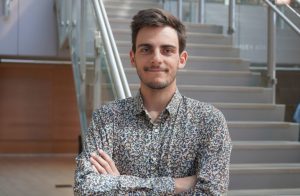
Meet Kasper Juel Petersen who completed his PhD in Mechanical Engineering in August 2024, under the supervision of Dr. Joshua Brinkeroff at UBC Okanagan’s School of Engineering. Kasper’s research was related to the complex intricacies of liquids and gasses.
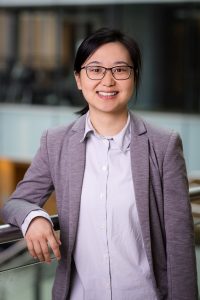
Qian’s research focuses on using digital and immersive technologies, optimization algorithms, and fabrication-aware design methods to transform construction projects digitally. Qian leads the Construction Integration and Digitalization (CID) lab which envisions to develop systematic digital and automation solutions to tackle the problems about construction stakeholder fragmentation and wastes across different project stages.
The University of British Columbia Okanagan (UBCO) recently powered up a new hydrogen research lab (H2LAB)—one of the most advanced of its kind in North America. FortisBC Energy Inc. (FortisBC) is supporting the project, helping the university drive innovation and hydrogen energy research.
